

RF Testing
RF testing is used to evaluate the wireless signal quality and regulatory compliance of electronic devices, helping ensure stable signals, reliable transmission, and reduced interference with other wireless equipment. Through transmitter, receiver, and antenna testing, BTL helps products meet market requirements in Taiwan, the United States, the European Union, Japan, Australia, New Zealand, and other regions.
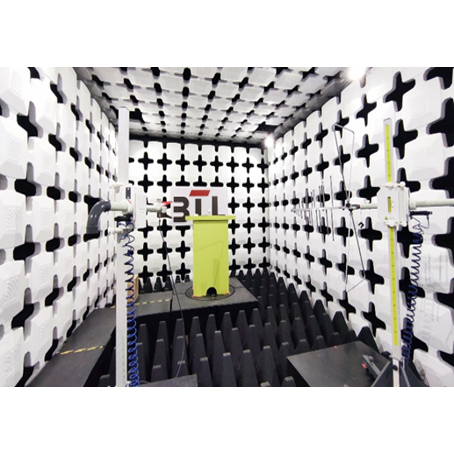
Wireless products must transmit reliably within specified frequency, power, and bandwidth limits while maintaining receiver performance in environments with other radio signals.
Antenna performance, coverage, and radiation patterns also directly affect connection quality and overall product performance.
Evaluates signal strength, frequency range, and bandwidth against applicable requirements while verifying that unwanted emissions do not cause interference to other frequency bands.
Evaluates receiver sensitivity to weak signals and resistance to interference in complex radio environments.
Measures antenna performance, coverage, and radiation characteristics.
Mobile communication and multi-band wireless devices.
RLAN, DFS, and multi-band networking equipment.
Bluetooth audio and short-range wireless products.
Wearable wireless devices.
Smart home and IoT wireless devices.
5 GHz / 6 GHz RLAN, VLP, and DFS.
Low-power short-range wireless devices.
Receiver sensitivity, blocking, and overload testing.
Product testing, test reports, and listing applications.
Taiwan NCC, U.S. FCC, EU CE, Japan, and Australia/New Zealand RCM.