

EU Releases Exemption Guidelines on Removability and Replaceability of Portable and LMT Batteries — Multiple Product Categories Relief Granted
On July 14, 2026, the European Commission published the "Commission Guidelines to Facilitate the Harmonised Application of Provisions on the Removability and Replaceability of Portable and Light Means of Transport (LMT) Batteries" (Commission Notice C(2026) 5032 final). These guidelines aim to provide a uniform interpretative framework for the implementation of Article 11 of the EU Battery Regulation (EU) 2023/1542, clarifying exemption and derogation scenarios for multiple product categories.
Article 11 of Regulation (EU) 2023/1542, governing the removability and replaceability of portable batteries and light means of transport (LMT) batteries, will enter into force on February 18, 2027.
I. Core Requirement: End Users Must Be Able to Remove and Replace Batteries Themselves
Pursuant to Article 11(1) of the EU Battery Regulation, any product incorporating portable batteries placed on the EU market must have batteries that can be safely removed and replaced by the end user (an ordinary adult consumer without any specialized experience or qualifications), without causing damage to the battery or the device. This requirement applies to entire batteries, not individual cells.
For LMT batteries (used in light means of transport such as e-bikes and e-scooters), Article 11(5) also establishes corresponding removability and replaceability requirements.
Special Note: If the product's primary function is to deliver electrical energy to other products (e.g., power banks, charging cases for wearable devices, vehicle battery jump starters), the product itself is considered a portable battery, and Article 11 does not apply.
II. Partial Derogations: Removal and Replacement Only by "Independent Professionals"
Partial Derogation: Batteries in the following three product categories need only be removable and replaceable by independent professionals, without meeting the requirement for end-user self-service (see Article 11(2)):
| Product Category | Typical Products & Key Assessment Criteria |
| 1. Appliances specifically designed for wet environments | The guidelines provide five assessment criteria, with IEC 60529 Ingress Protection (IP) ratings as an important reference. Products meeting the corresponding waterproof ratings (e.g., IPX4 – IPX7) such as wireless earbuds, heart rate monitor straps, smart glasses, smartwatches, and outdoor wireless speakers may fall under this category. |
| 2. Medical devices and in-vitro diagnostic medical devices | Professional medical imaging and radiotherapy equipment (as defined under Regulations (EU) 2017/745 and (EU) 2017/746), whose portable batteries may be removable and replaceable only by independent professionals. |
| 3. Wearable devices | Based on miniaturisation considerations, wearable devices meeting the conditions of Article 11(2)(c) — smartwatches, fitness trackers, smart glasses, and electronic devices integrated into clothing and accessories. |
III. Full Derogations: No End-User Removability and Replaceability Required
Full Derogation: Article 11(3) stipulates two full derogation scenarios: where continuity of power supply is necessary and a permanent connection between the product and the battery is required to ensure safety, or for products whose main function is data collection and supply — for data integrity reasons — portable batteries need not meet the end-user removability and replaceability requirement.
1. Products Exempted on Safety Grounds
Implantable active medical devices: e.g., cardiac pacemakers, implantable cardioverter defibrillators, implantable pulse generators.
High-risk in-vitro diagnostic medical devices: e.g., instruments for detecting transmissible agents in blood transfusion screening, blood glucose meters used with test strips.
Implantable active medical devices and certain in-vitro diagnostic medical devices: e.g., surgical instruments, endoscope washer-disinfectors, and hearing aids.
Construction safety products (falling under the Construction Products Regulation, CPR): e.g., smoke alarms (designed for at least 10 years of uninterrupted operation), fire alarms, carbon monoxide detectors, gas alarms, fixed fire-fighting equipment, escape doors, space heating appliances, pumps, and power control devices.
Automotive electronic products: e.g., eCall emergency call systems, tire pressure monitoring systems (TPMS), anti-theft alarm systems, battery temperature warning systems, Intelligent Speed Assistance (ISA) systems, tachographs, and Event Data Recorders (EDR).
2. Products Exempted on Data Integrity Grounds
Professional weather stations and battery-powered equipment used in laboratories.
Temperature and humidity sensors for transport and storage of temperature-sensitive goods: e.g., refrigerated transport, storage containers, warehouses, and incubators.
CMOS batteries: Complementary Metal-Oxide-Semiconductor batteries in digital cameras, processors, sensors, and medical devices, used to power volatile memory or device internal clocks.
Cryptography: e.g., quantum key distribution (QKD) systems for continuous secure telecommunications.
Battery-powered medical and veterinary applications: e.g., on-body wearable glucose biosensor systems, veterinary in-vitro diagnostic medical devices using button cell batteries to support a Real-Time Clock (RTC).
Devices whose primary function is data collection and that require continuous power supply: e.g., On-Board Equipment (OBE) for electronic toll services, where power disruption would compromise key data for toll calculation.
Digital payment point-of-sale (POS) terminal hardware: protects payment data integrity per PCI DSS standards; e.g., electronic credential hardware for holding and transmitting personal digital payment credential data.
Note: This derogation does NOT apply if data collection is merely an additional function (not the primary function), or if the device is equipped with non-volatile memory and there is no risk of data integrity loss.
IV. Other Important Provisions
1. Compatible Battery
Articles 11(6) and 11(8) require that all portable or LMT batteries and their corresponding devices be designed to allow the use of both original and compatible batteries. Compatible batteries must not pose a risk to user or device safety and must ensure the device operates as intended. For multi-cell batteries, compatible cells must have the same technical parameters (capacity, state of health, design, and chemistry).
2. Spare Parts Availability Period
Article 11(7) requires that portable batteries and LMT batteries be made available as spare parts for at least 5 years after the last unit of the equipment model is placed on the market, at a reasonable and non-discriminatory price for both independent professionals and end users. Reference to other EU harmonisation regulations indicates that spare parts must be delivered within 5 working days of receiving the order.
Special Provision for Smartphones and Tablets: Under Regulation (EU) 2023/1670, from June 20, 2025, manufacturers must make portable batteries (including non-reusable fasteners) available to professional repairers and end users for at least 7 years after the product ceases to be placed on the market.
Special Provision for Electric Toys: Under Regulation (EU) 2025/2509, electric toys incorporating batteries will be subject to applicable requirements from August 1, 2030.
3. Software Restrictions and "Parts-Pairing" Prohibition
Article 11(8) explicitly prohibits the use of software to impede the replacement of portable or LMT batteries (and their key components) with compatible batteries. The guidelines specifically highlight the practice of "parts-pairing" — serializing spare parts (including batteries) via software and binding them to individual device units, causing non-original replacement parts to be unrecognized or have limited functionality during repair.
Under Regulation (EU) 2023/1670, manufacturers of smartphones and tablets that provide serialized spare parts must offer professional repairers non-discriminatory access to the software tools, firmware, or auxiliary means necessary for replacement.
Software notifications alerting device users that "a non-original spare battery is in use" are permitted, provided that such notifications do not affect any functionality of the device or compatible battery, nor impact the user experience.
The release of these EU Battery Regulation removability and replaceability guidelines marks the entry of the EU Battery Regulation into a substantive implementation phase. Furthermore, other fundamental requirements — such as restrictions on hazardous substances, labeling, QR codes, EPR (Extended Producer Responsibility) recycling registration, and waste battery identification — will also become mandatory on August 18, 2026 / February 18, 2027, respectively. With a window of less than half a year at most, it is strongly recommended that battery manufacturers complete relevant compliance preparations as soon as possible to avoid risks of customs clearance obstruction, EU market delisting penalties, and other enforcement actions.
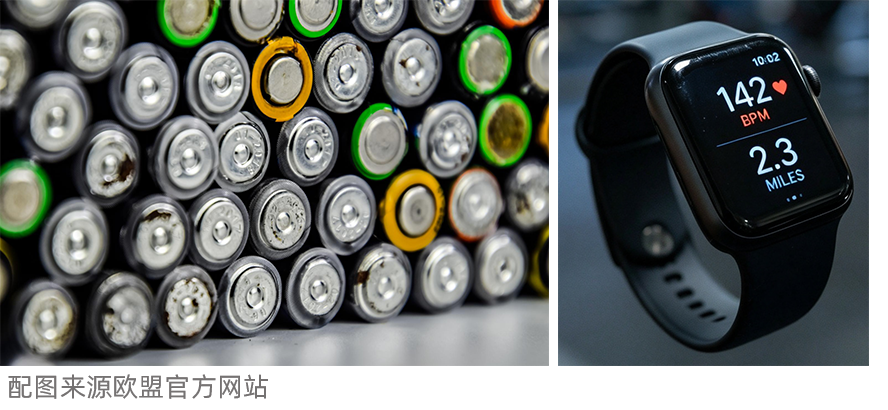
Relevant information

6G Developments: Past, Present and Future
The formulation of 6G standards has entered a more concrete phase. At the 3GPP RAN Plenary Meeting held in Singapore in June 2026, the industry made progress in multiple key research areas and finalized the timeline for Release 21, which is regarded as the first standard version expected to formally define 6G.

Overview of EN IEC 61000-4-29:2026
The key focus of the 2026 edition is to address new DC power distribution environments, especially higher-voltage DC systems. It also clarifies test generator capability, duration tolerance, current limitation during short interruptions, inrush current verification, result evaluation, and test report requirements. For products using 24 Vdc, 48 Vdc, 380 Vdc, 400 Vdc, 800 Vdc, or other DC input pow

Empowering the future and moving forward together: The EMC capability of BTL DG base is reaching a new level
The electromagnetic compatibility (EMC) testing capability of BTL DG Base has undergone a significant upgrade, officially expanding to the testing fields of large power products and automotive electronic equipment, empowering the high-quality development of the industry with more comprehensive technical strength.