

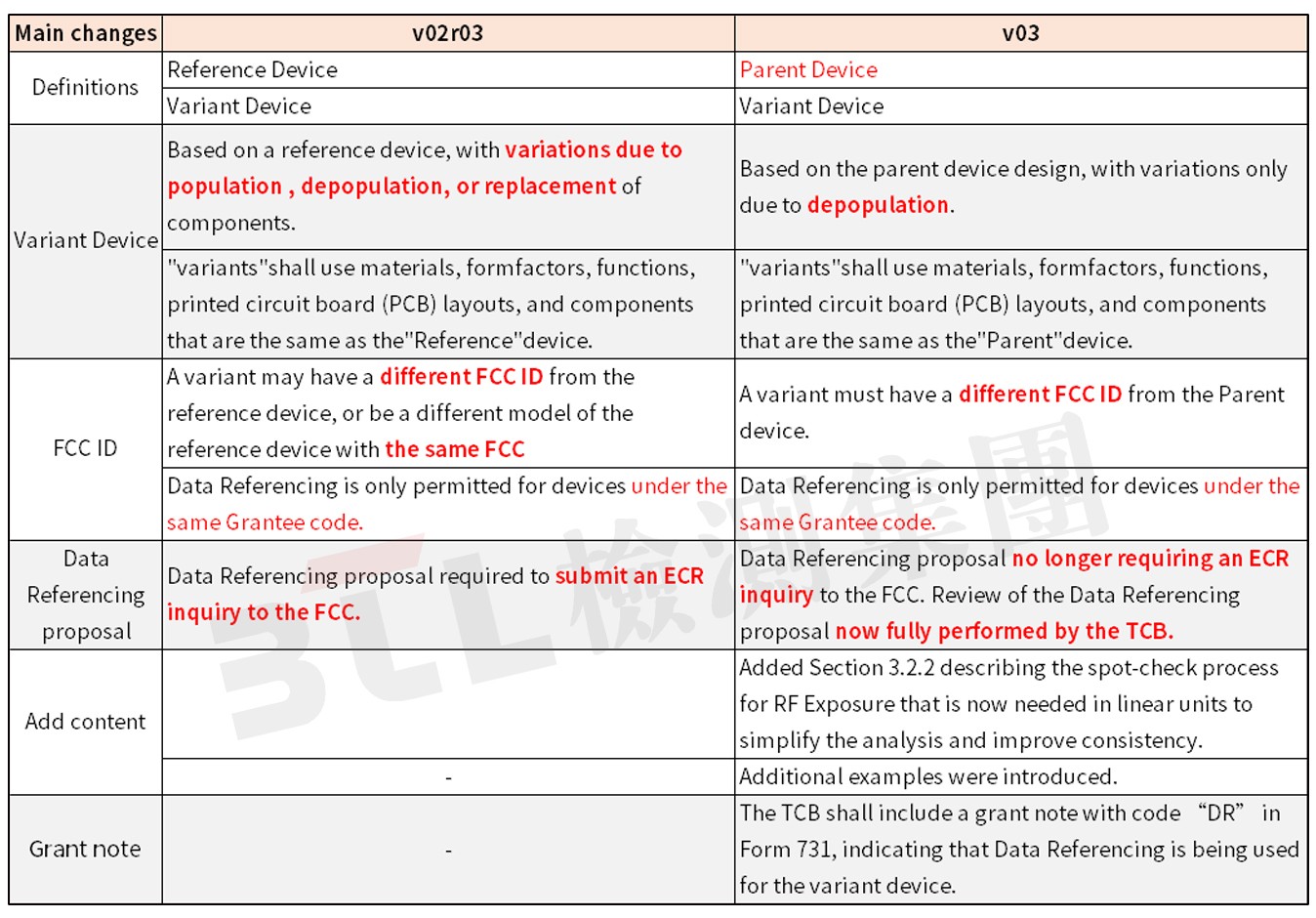
On March 21, 2025, FCC released KDB 484596 D01 Referencing Test Data v03 to replace the old version v02r03. New version 03 can be used for immediate certification. During the transition period (before April 30, 2025), v02r03 is still allowed to be used, but v03 or v02r03 must be used entirely, and the new and old programs cannot be mixed.
The main changes in the new version v03: Data Referencing proposal no longer requiring an ECR inquiry to the FCC. Review of the Data Referencing proposal now fully performed by the TCB.The data reference process is simplified, flexibility is improved, and the certification cycle is shortened.
Main changes of KDB 484596:
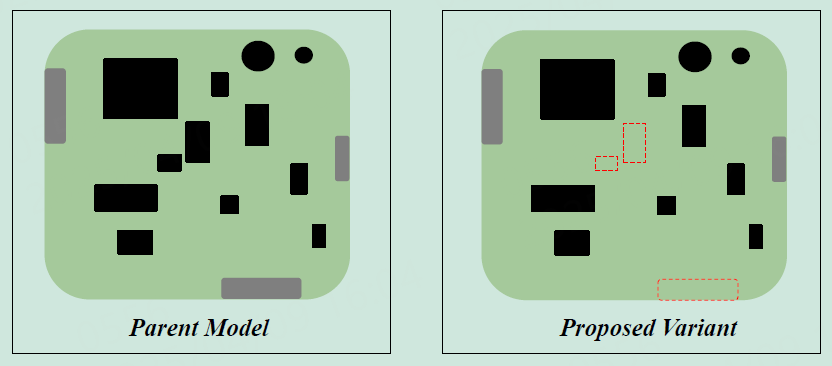
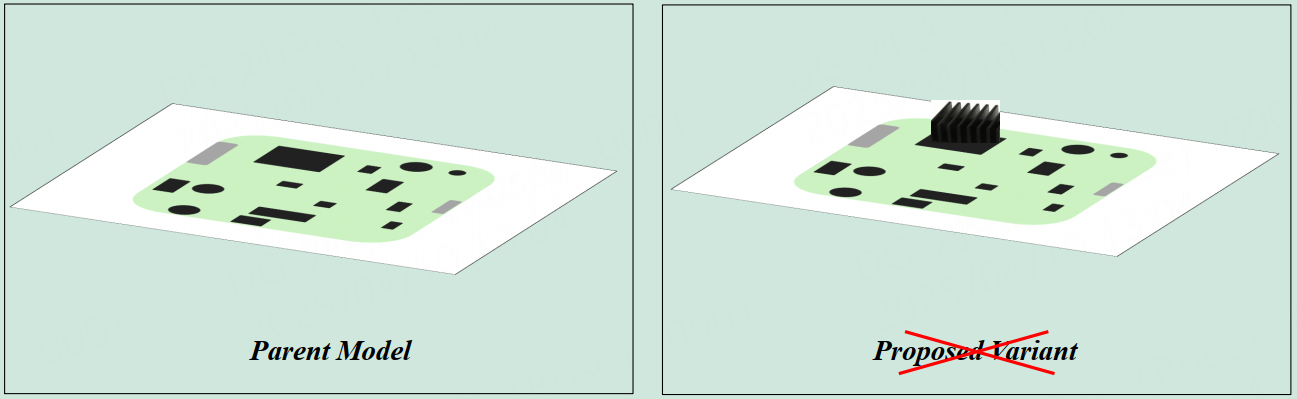
Examples of acceptable and not acceptable variants follow:
Example 1:Acceptable Variant: Here the PCB features component removals (--- lines), and these components have been assessed to not impact the functionality of other radios on the board.
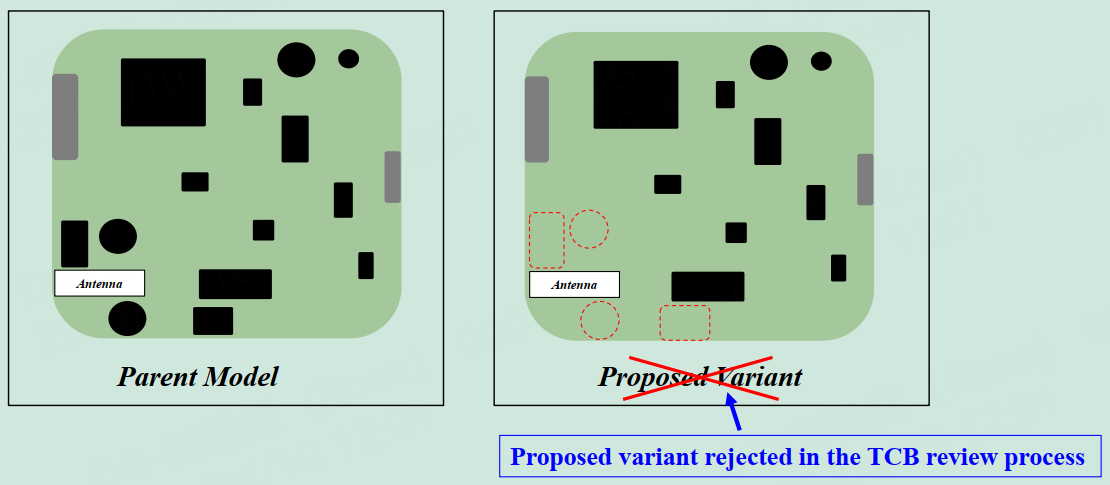
Example 2 : Non-acceptable Variant: The removal of components (--- lines) in the variant may significantly impact the pattern of the emissions from the antenna.
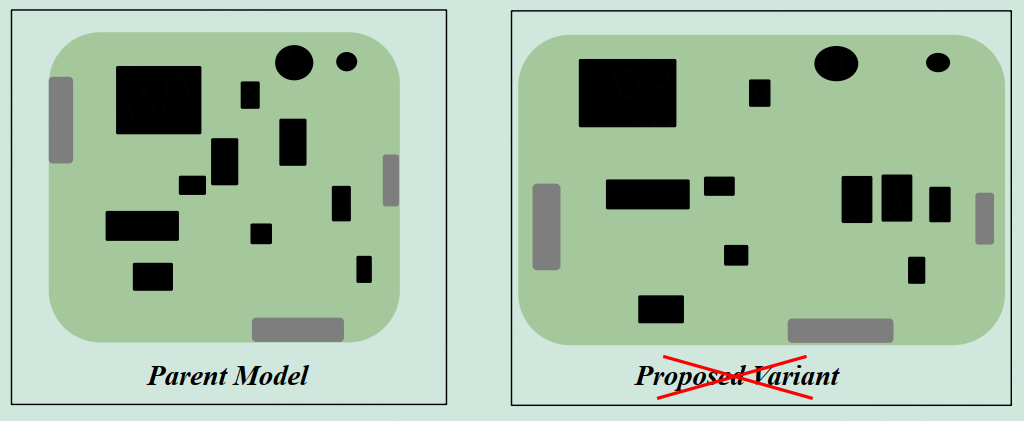
Example 3: Non-acceptable Variant: The variant has the same components (no depopulation) but is not acceptable because the PCB has a different form factor, and components are significantly displaced.
Example 4: Non-acceptable Variant: PCB with the same form factor and components but featuring a prominent heat sink, not grounded, near an antenna, thus possibly acting as a reflector and impacting the antenna pattern.
FCC data reference certification application process:
1. The lab obtains the differences between the parent and variants, and evaluates which data can be referenced by the parent, and those that cannot be referenced need additional testing.
2. The lab communicates the product differences and data references with the TCB, and the TCB confirms that the data reference plan complies with the FCC technical
standards.
3. The lab shall carry out data citation and evaluation of the newly added test items according to the plan.
4. The lab issues a variant report: clearly identified: “reference data” (from the parent device with its FCC ID) and “new test data” (tests for the variant).
5. Submit all the relevant certification documents and test reports of the variant to TCB for review.
6. TCB reviews and issues the certificate.
If you have different products and want to apply for different FCC IDs, but are not sure whether data can be referenced between products, how much testing can be reduced, or how much testing can be reduced, you can contact BTL~
BTL has been engaged in FCC for many years, both in testing and certification, and has rich experience, and also have close communication with TCB. It can help companies to handle FCC ID certification efficiently and provide legal proof for products to enter the Canadian market. If you want to know more about FCC or needs FCC certification, please feel free to contact the BTL team at any time, and we will serve you wholeheartedly!
Relevant information

CRA Implementation Enters a Critical Phase
In August 2026, preparations for the implementation of the EU Cyber Resilience Act (CRA) entered a critical stage. With the reporting obligations set to take effect on September 11, 2026, drawing near, the European Commission and the European Union Agency for Cybersecurity (ENISA) have been intensively issuing implementation guidance and materials related to the single reporting platform.
Canada's ISED Officially Releases RSS-310 Issue 6: Major Updates to Radio Frequency Equipment Requirements
Innovation, Science and Economic Development Canada (ISED) has formally issued RSS-310, Issue 6, “Licence-Exempt Radio Apparatus: Category II Equipment,” replacing Issue 5, which has been in effect since 2020