

Preface: For multimedia devices with xDSL ports, EN 55035 standard Tables 2.2 and 2.3 have specific test requirements. Tests for broadband impulse noise disturbance (repetitive) and broadband impulse noise disturbance (isolated) are necessary. It is essential to prepare an appropriate line simulator and EUT observation CRC (Cyclic Redundancy Check) method in advance.
Product Testing: For multimedia devices with xDSL ports, in addition to meeting the conventional CS/Surge/EFT requirements, EMS also needs to undergo testing for broadband pulse noise interference.
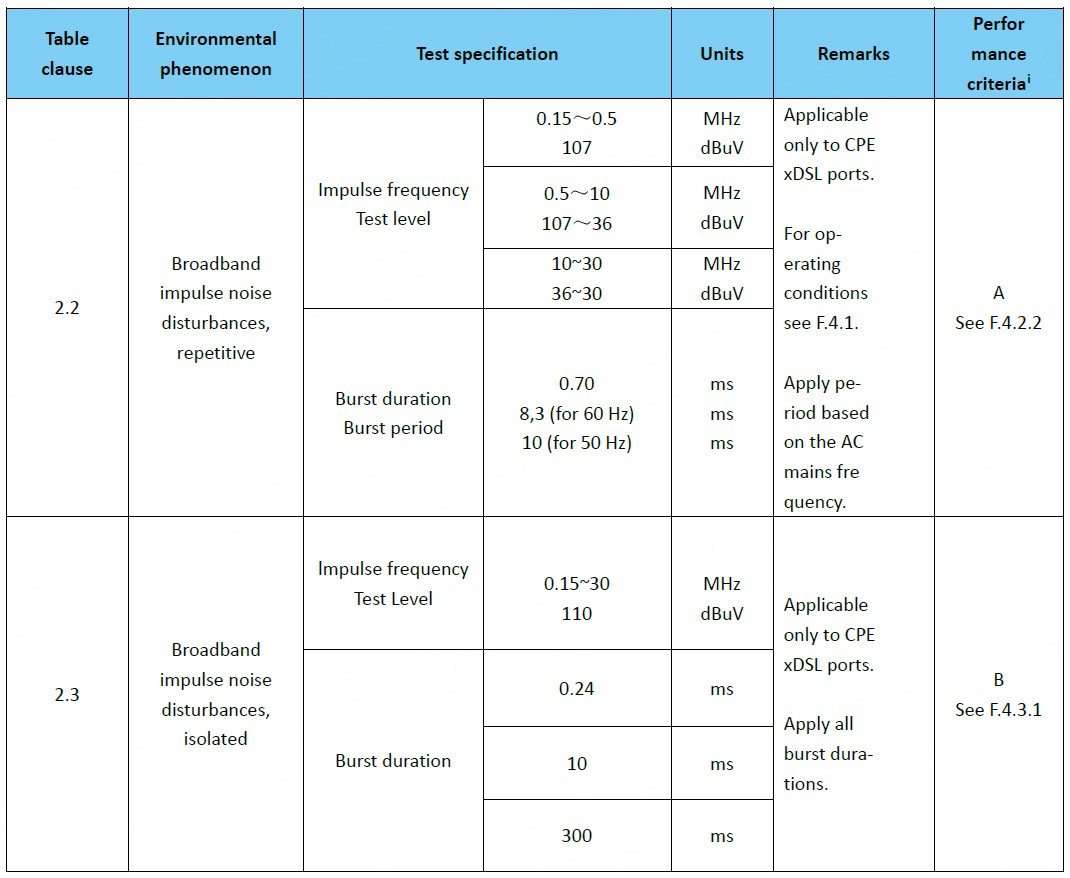
1. Requirements for Broadband Pulse Noise Interference Tests 2.2 and 2.3
2. Setup of broadband pulse noise interference test
Broadband pulse conducted disturbance
Apply repetitive noise pulses and isolated noise pulses respectively to the DSL port of the EUT. Tables 2.2 and 2.3 present the requirements for the test grades, pulse durations and pulse periods of the two tests.
This test procedure is based on the CDN method specified in IEC61000-4-6:2008, but the signal generator is replaced with a generator capable of generating white noise pulses.
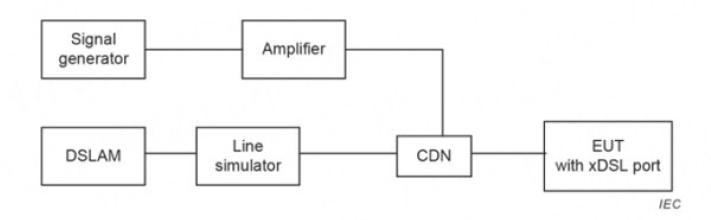
For repetitive pulse tests, at least 2 minutes of disturbance should be applied to each test port.
For isolated pulse tests, at least five isolated pulses should be applied, with an interval of at least 60 seconds between each pulse.
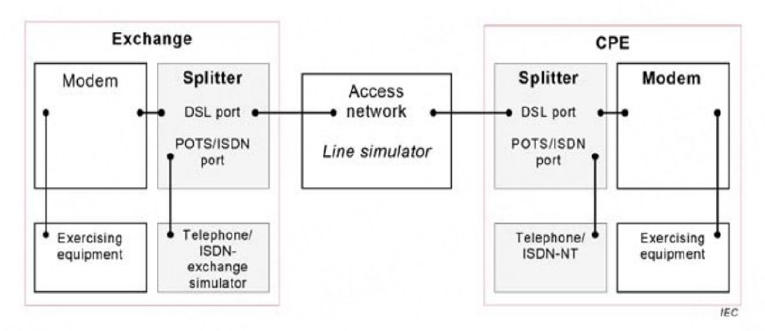
3. Setup of xDSL product system
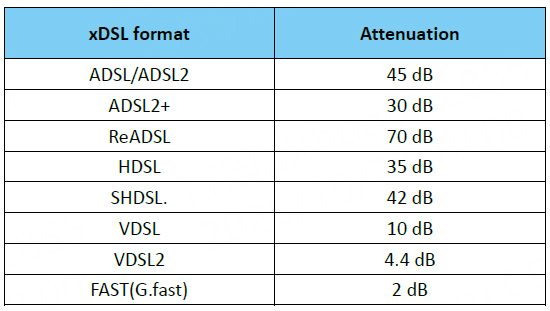
4.Line attenuation of different xDSL standards
5. The attenuation of broadband pulse noise interference in lines of different xDSL standards (repeated) is judged by the following criterion:No additional CRCs shall be generated.
After the connection is established, when broadband pulse (repetitive) harassment is applied, the modem can train and minimize the connection interruption for the end user. Therefore, the following procedures and performance criteria apply.
The impulse noise protection (INP) grade supported by EUT should be selected for the immunity test. The grade used should be stated in the test report, and the maximum delay should be set to 8ms.
When no pulse disturbance is applied: Within the noise index tolerance related to the transmission rate, the modem should not be retrained. The transmission rate depends on the line attenuation and the steady-state noise of the line (the actual value is between the minimum and maximum transmission rates preset at the port).
Then apply pulse disturbance at the required test level.
When pulse disturbance is applied: The modem does not need to be retrained at the bit rate set before applying pulse noise, nor does it need to perform SES operations, and no additional CRC errors will occur due to pulse noise.
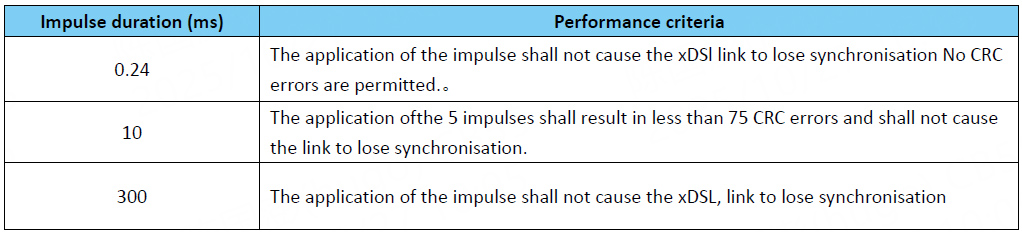
6. Broadband pulse noise interference (isolated) is determined by the criterion:The number of CRCs that can be generated varies depending on the pulse duration.
BTL has extensive experience in certifying multimedia devices (laptops/tablets/mobile phones/displays/TVs/gateways/headphones/speakers, etc.). It has a professional team that provides multi-country certification solutions. The technical team promptly studies and implements tests for new standards/new technologies to ensure the success of your products.
Relevant information

CRA Implementation Enters a Critical Phase
In August 2026, preparations for the implementation of the EU Cyber Resilience Act (CRA) entered a critical stage. With the reporting obligations set to take effect on September 11, 2026, drawing near, the European Commission and the European Union Agency for Cybersecurity (ENISA) have been intensively issuing implementation guidance and materials related to the single reporting platform.
Canada's ISED Officially Releases RSS-310 Issue 6: Major Updates to Radio Frequency Equipment Requirements
Innovation, Science and Economic Development Canada (ISED) has formally issued RSS-310, Issue 6, “Licence-Exempt Radio Apparatus: Category II Equipment,” replacing Issue 5, which has been in effect since 2020