

802.11ax is an upgraded version of 802.11ac, called high-efficiency Wireless, and is also defined as wi-fi 6.
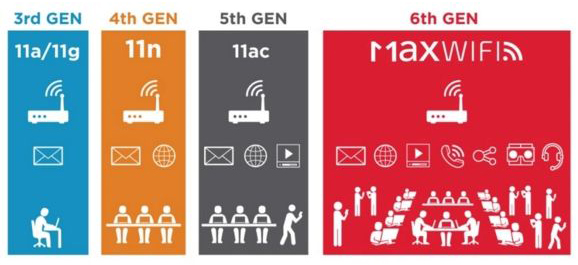
The new 802.11ax technology can support both 2.4ghz and 5GHz frequency band, and is compatible with 802.11a/b/g/n/ac, which can increase the average transmission rate of each user in high-density scenes (such as railway stations, airports, gymnasiums, etc.) by 4 times. Key technologies such as MU-MIMO and OFDMA are mainly adopted. MU-MIMO technology can process the data of multiple users at the same time, without priority, and can meet the needs of multiple users at the same time. OFDMA improves user data rates and reduces latency, especially for devices with low data rate requirements.
For the new 802.11ax technology, BTL has been equipped with complete testing software, peripheral equipment, engineering and technical team and other aspects. Assist you in the development of new technology field, to provide professional product testing, escort for you!
Relevant information

EU Releases Exemption Guidelines on Removability and Replaceability of Portable and LMT Batteries — Multiple Product Categories Relief Granted
On July 14, 2026, the European Commission published the "Commission Guidelines to Facilitate the Harmonised Application of Provisions on the Removability and Replaceability of Portable and Light Means of Transport (LMT) Batteries" (Commission Notice C(2026) 5032 final). These guidelines aim to provide a uniform interpretative framework for the implementation of Article 11 of the EU Battery Regulat

6G Developments: Past, Present and Future
The formulation of 6G standards has entered a more concrete phase. At the 3GPP RAN Plenary Meeting held in Singapore in June 2026, the industry made progress in multiple key research areas and finalized the timeline for Release 21, which is regarded as the first standard version expected to formally define 6G.

Overview of EN IEC 61000-4-29:2026
The key focus of the 2026 edition is to address new DC power distribution environments, especially higher-voltage DC systems. It also clarifies test generator capability, duration tolerance, current limitation during short interruptions, inrush current verification, result evaluation, and test report requirements. For products using 24 Vdc, 48 Vdc, 380 Vdc, 400 Vdc, 800 Vdc, or other DC input pow