

Looking Forward | Do you know what changes will be made to the CE Wi-Fi 5G standard?
As is well known, the ETSI EN 301 893 standard has not been updated since the release of V2.1.1 in May 2017. In fact, the European Telecommunications Standards Institute (ETSI) has been writing and modifying the EN 301 893 standard, and from 2017 to 2023, more than 50 draft versions of the standard have been updated (not publicly available, only visible to members). Finally, on September 22, 2023, ETSI updated the final draft ETSI EN 301 893 V2.1.52 (not publicly available, only visible to members), indicating that it is not far from the official release and public disclosure.
Below is an explanation of Draft ETSI EN 301 893 V2.1.52:
>> Major Updates <<
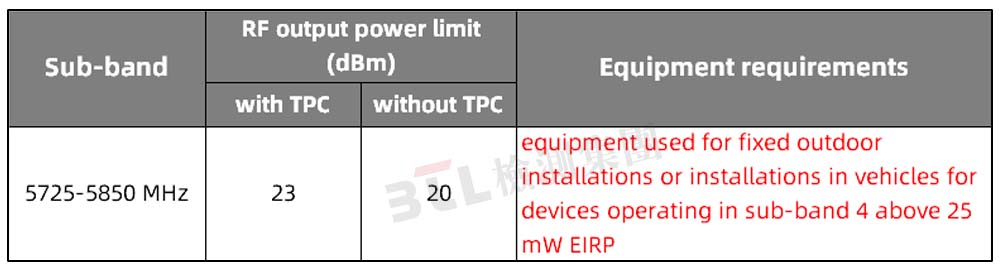
Previously, if the manufacturer wanted to certify Wi-Fi 5G Band 4 (5725-5850 MHz), they would either choose to use ETSI EN 300 440 with a maximum power of only 25 mW EIRP, or choose to use ETSI EN 302 502 with a bandwidth of only 10 MHz and 20 MHz.
The biggest update to Draft ETSI EN 301 893 V2.1.52 is the addition of Wi-Fi 5G Band 4, with the following requirements:
Unfortunately, although Draft ETSI EN 301 893 V2.1.52 added Wi-Fi 5G Band 4, the regulations also added a requirement for Band 4:
- When using RF output power greater than 25 mW EIRP, it is necessary to evaluate a test, namely the country determination capability, which specifies which CEPT (European Conference of Postal and Telecommunications Administrations) countries permit use of WAS/RLAN in sub-band 4 or parts thereof are found in ECO report 06.
So how many European countries in ECO report 06 (2022-06-09) allow Band 4 to use EIRP greater than 25 mW?
- The answer is that there are currently only two, one is the Czech Republic and the other is the United Kingdom.
Therefore, if a manufacturer wants to certify Wi-Fi 5G Band 4 with a power greater than 25 mW EIRP, they need to meet the requirements of the country determination capability for this project! If the power is not greater than 25 mW EIRP, it is not required.
>> Test Items <<
The test items for Draft ETSI EN 301 893 V2.1.52 are shown in the table below (highlighted in red are the contents that differ from V2.1.1 version):
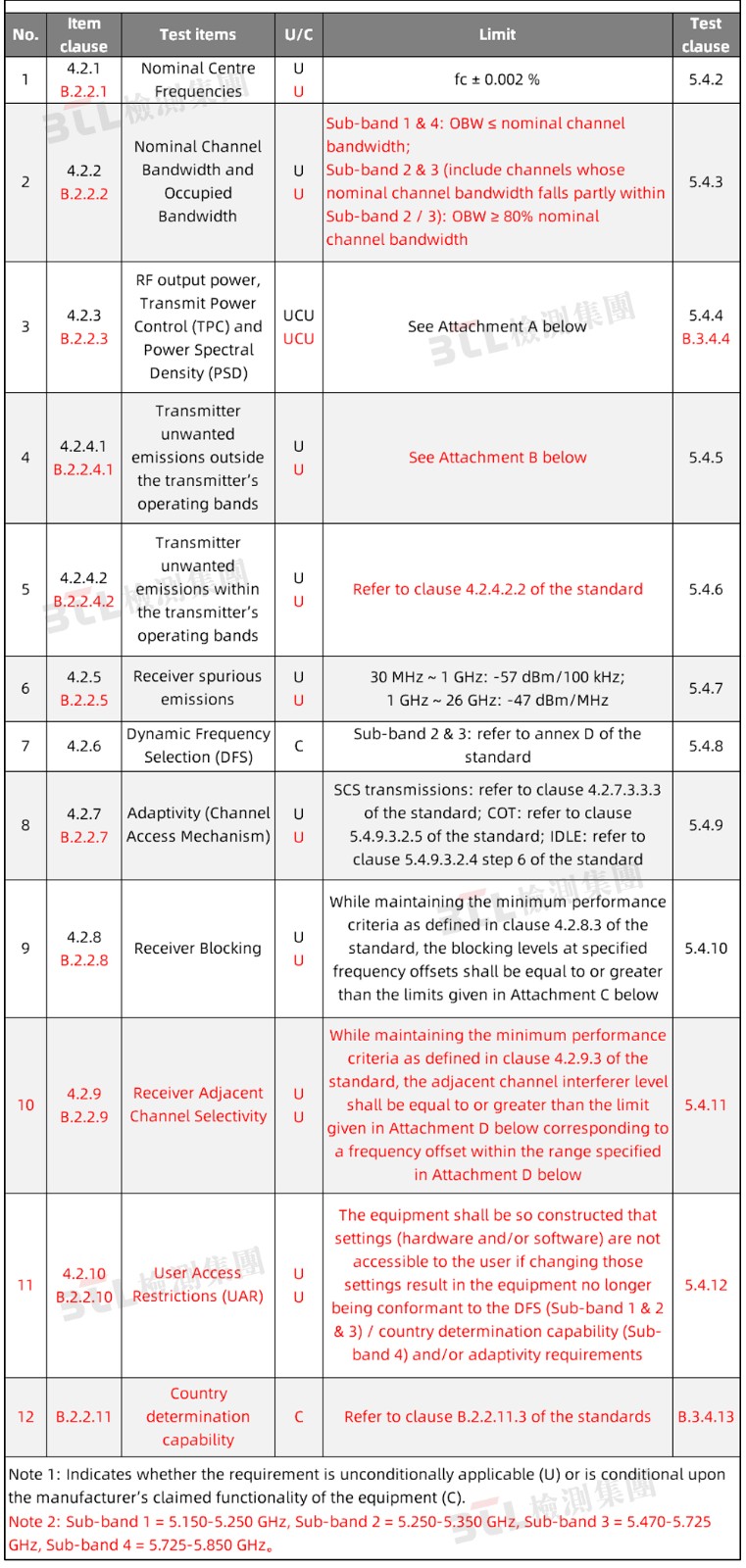
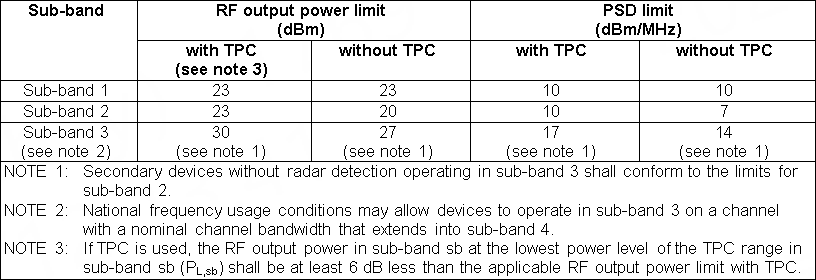
Attachment A:Power, TPC & PSD Limit:

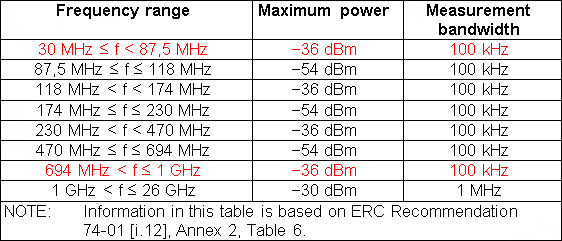
Attachment B:Transmitter unwanted emissions outside the transmitter’s operating bands Limit:
Attachment C:Blocking Limit:
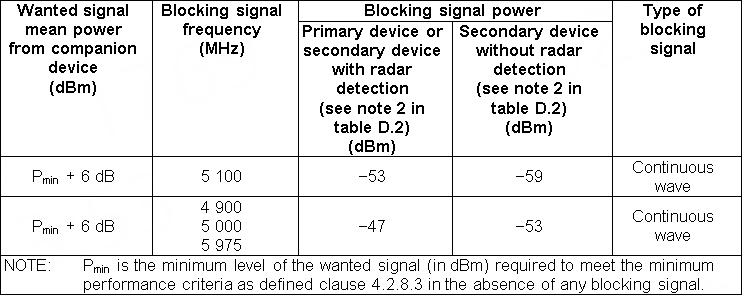
Attachment D:Adjacent Channel Selectivity Limit:
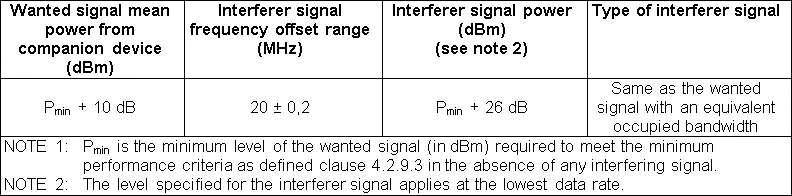
>> Difference Comparison <<
The differences between ETSI EN 301 893 V2.1.1 and Draft ETSI EN 301 893 V2.1.52 are shown in the table below:
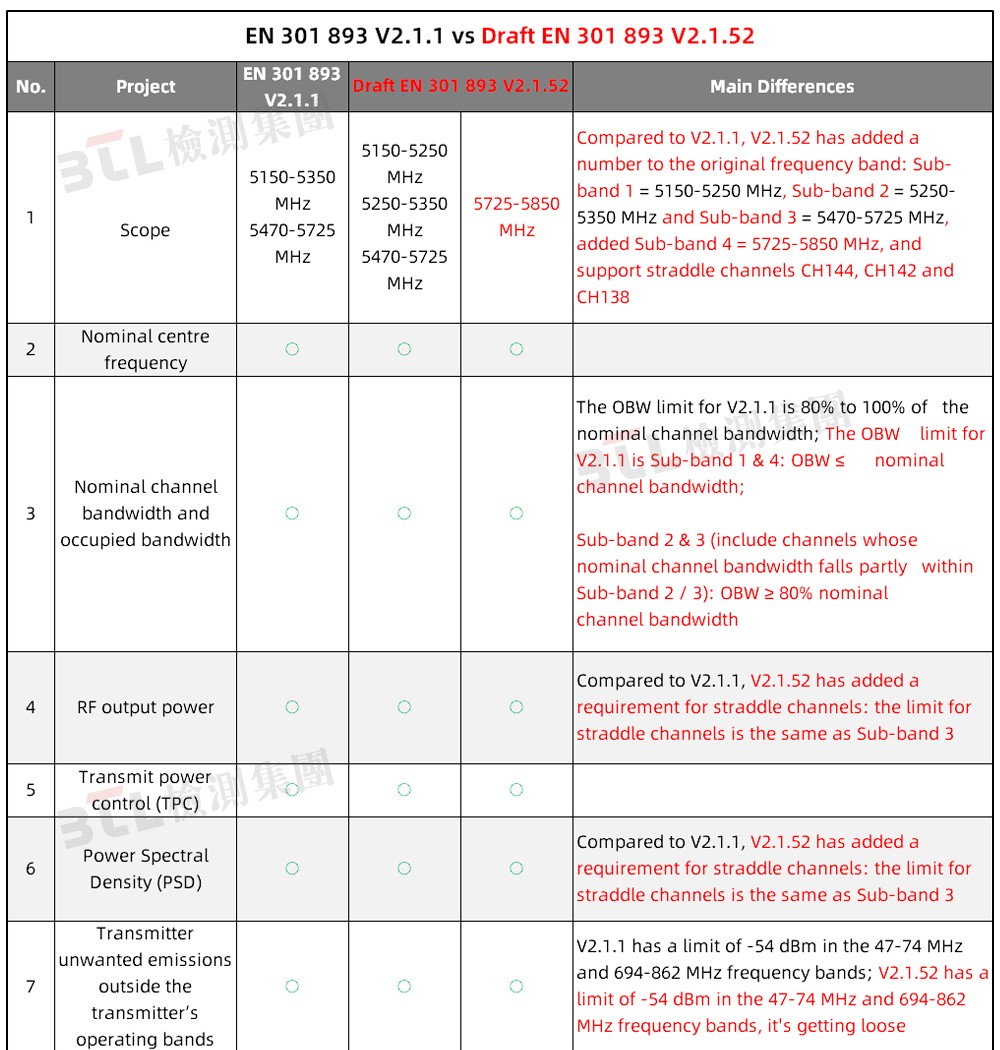
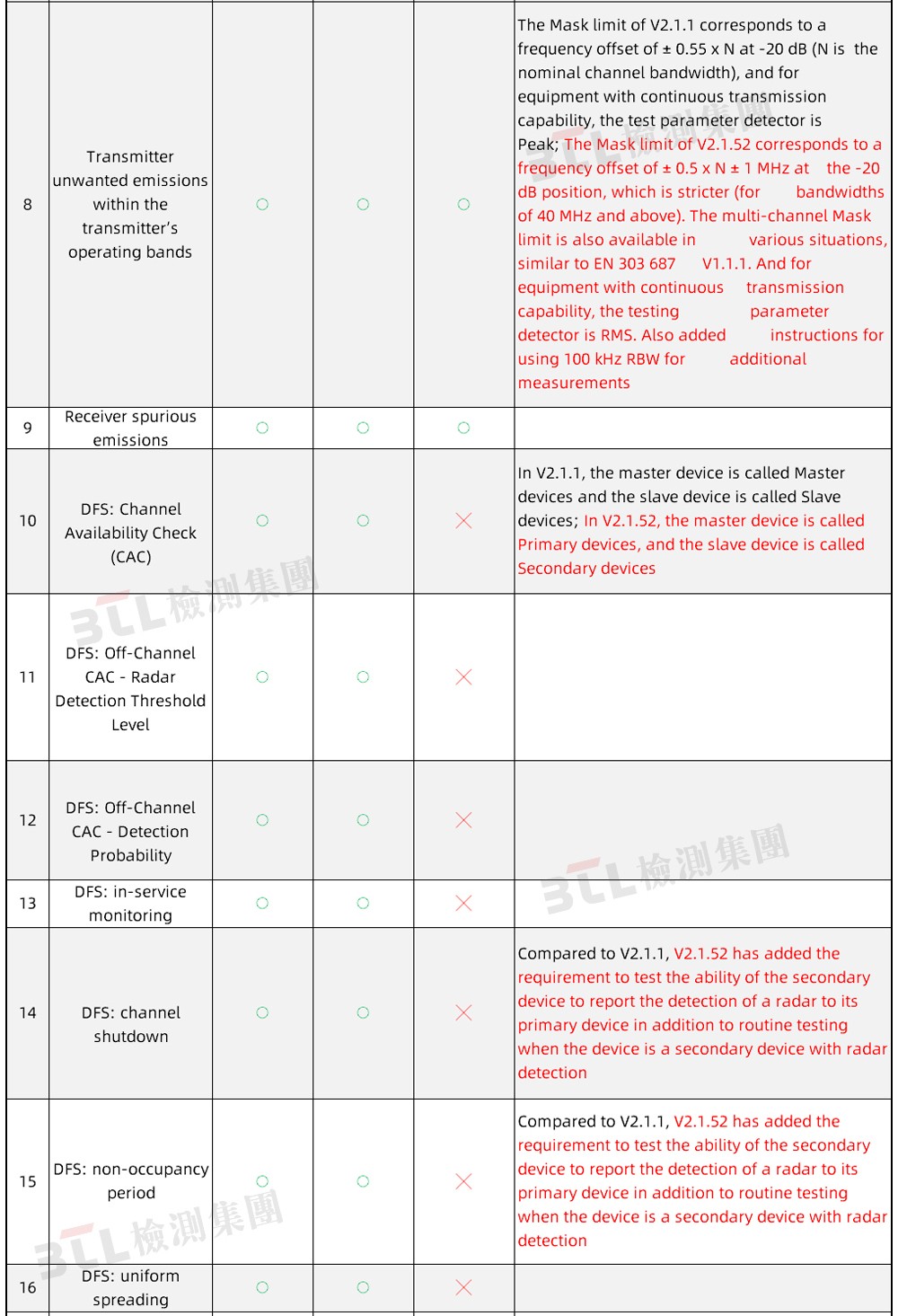
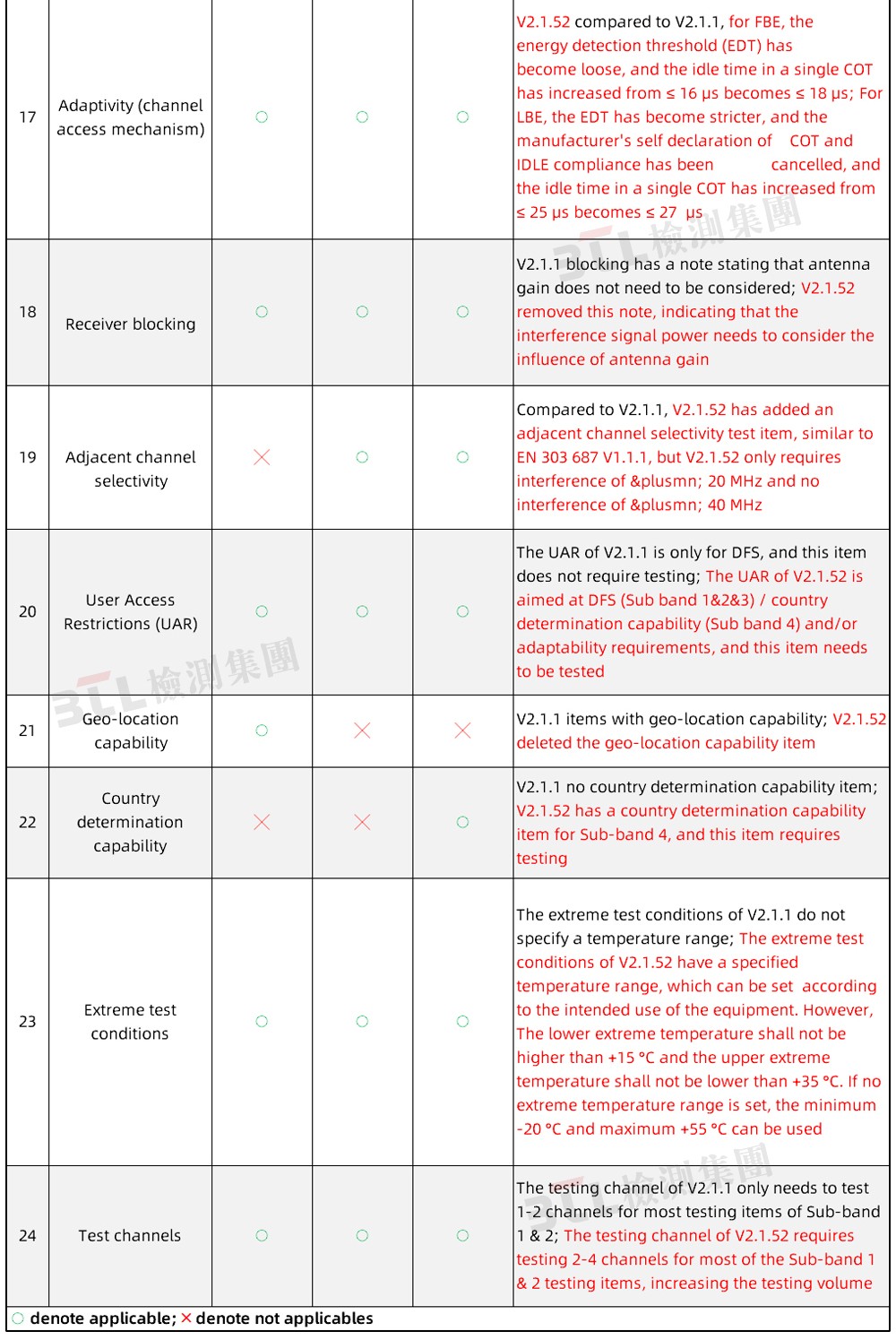
I believe that after reading the above content, you have a certain understanding of the upcoming changes to the CE Wi-Fi 5G standard. After the official update and release of the ETSI EN 301 893 standard, BTL will share the latest information with everyone.
BTL now has the test energy of CE Wi-Fi (Wi-Fi 2.4G / Wi-Fi 5G / Wi-Fi 6E & / Wi-Fi 7),you are welcome to contact the BTL team. BTL will share the most professional and comprehensive information with you.
Relevant information

EU Releases Exemption Guidelines on Removability and Replaceability of Portable and LMT Batteries — Multiple Product Categories Relief Granted
On July 14, 2026, the European Commission published the "Commission Guidelines to Facilitate the Harmonised Application of Provisions on the Removability and Replaceability of Portable and Light Means of Transport (LMT) Batteries" (Commission Notice C(2026) 5032 final). These guidelines aim to provide a uniform interpretative framework for the implementation of Article 11 of the EU Battery Regulat

6G Developments: Past, Present and Future
The formulation of 6G standards has entered a more concrete phase. At the 3GPP RAN Plenary Meeting held in Singapore in June 2026, the industry made progress in multiple key research areas and finalized the timeline for Release 21, which is regarded as the first standard version expected to formally define 6G.

Overview of EN IEC 61000-4-29:2026
The key focus of the 2026 edition is to address new DC power distribution environments, especially higher-voltage DC systems. It also clarifies test generator capability, duration tolerance, current limitation during short interruptions, inrush current verification, result evaluation, and test report requirements. For products using 24 Vdc, 48 Vdc, 380 Vdc, 400 Vdc, 800 Vdc, or other DC input pow