

What is DC DIP?
Simulating transient voltage drops and interruptions caused by faults (short circuit or ground fault) in the DC power supply network; And voltage changes caused by continuous changes in loads connected to the grid.
Why test DIPs?
Dips often occurs in our daily life. When the power supply system is unstable or overloaded, the voltage may suddenly drop or interrupt, which may make the electronic products working in the same power grid malfunction or even explode and damage.
So what items does DC DIP need to test?
DC DIP test requirements are performed according to EN IEC 61000-4-29; The requirements are as follows:
1. Test voltage selection
When the equipment has a rated voltage range, the following provisions should be adopted:
> If the voltage range does not exceed 20% of the lower voltage specified for the rated voltage range, a voltage test may be specified within that range.
> In other cases, the test procedure shall be applied to the minimum and maximum voltages declared within the voltage range.
Ps: BTL uses 3ctest test equipment to support product testing in the range of voltage DC 0-450V and current 0-50A.
2. Test project
When the EUT (sample under test) is in a typical operating state, we need to test for the following items:
2.1 Voltage dip
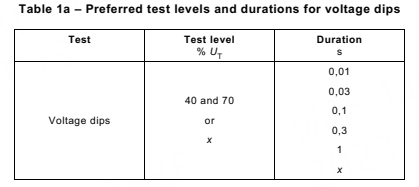
Test Level 40% and 70% (%UT) voltage dips, that is, when the current voltage of the EUT is reduced by 60% and 30%, check whether the EUT can operate in typical mode.
2.2 Voltage Interruption
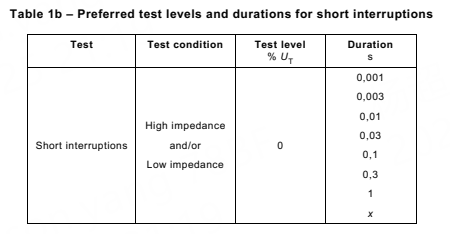
Voltage interruption means that the current EUT voltage drops by 100%, which is equivalent to the state of power failure; At this time, the test generator should be set in the following two states:
> Block the reverse current from the load (high impedance)
> Absorbed load reverse current (low impedance)
2.3 Voltage Variation
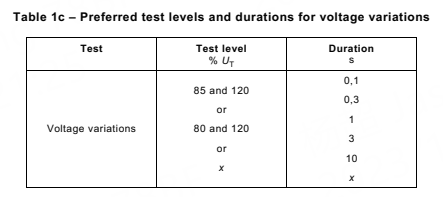
Test levels are divided into 85% and 120%, or 80% and 120%, or other grades, and the test level is selected by the manufacturer.
2.1 & 2.2 & 2.3 The number of trials was 3 times, and the minimum interval between the two trials was 10 s.
How are DC DIP test results determined?
The EN IEC 61000-4-29 standard specifies that test results should be classified according to loss of function or degradation of performance of the EUT.
These classifications relate to the performance registration specified by the manufacturer, the applicant for the test, or agreed between the manufacturer and the user; The recommended categories are as follows:
A) Normal performance within the limit values specified by the manufacturer, applicant or user;
B) the function or performance is temporarily reduced or lost, but after the interference stops, the device under test can automatically resume its normal performance without operator intervention;
C) temporary loss of function or degradation of performance requiring operator intervention to correct;
D) Loss of functionality or degradation of performance that cannot be recovered due to hardware or software damage or data loss.
The manufacturer's instructions can define which effects on the EUT are negligible or acceptable. In the absence of a suitable generic, product or product class standard, the classification can serve as a guide for the development of performance standards by the General, Product and Product Family Standards Committee, or as a framework for a performance standard agreement between manufacturers and buyers, for example in the absence of a suitable generic, product or product family standard.
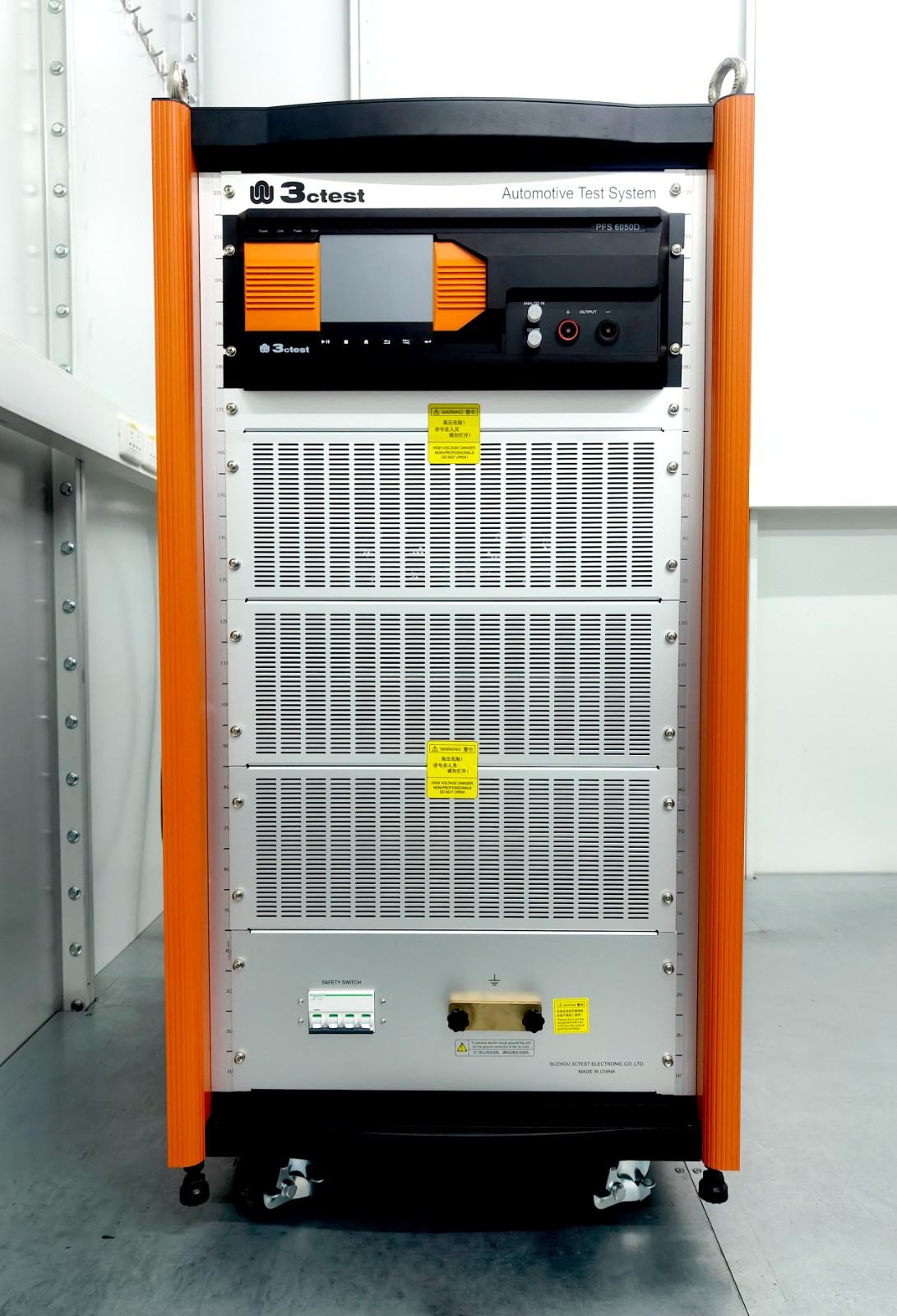

BTL has completed the environment construction of DC DIP in September and has been verified by CEPREI, and can provide pre-test services for customers and friends. At the same time, we are working hard to apply for domestic and foreign qualifications, welcome to contact the BTL team, BTL will share with you the most professional and comprehensive certification information.
Relevant information

EU Releases Exemption Guidelines on Removability and Replaceability of Portable and LMT Batteries — Multiple Product Categories Relief Granted
On July 14, 2026, the European Commission published the "Commission Guidelines to Facilitate the Harmonised Application of Provisions on the Removability and Replaceability of Portable and Light Means of Transport (LMT) Batteries" (Commission Notice C(2026) 5032 final). These guidelines aim to provide a uniform interpretative framework for the implementation of Article 11 of the EU Battery Regulat

6G Developments: Past, Present and Future
The formulation of 6G standards has entered a more concrete phase. At the 3GPP RAN Plenary Meeting held in Singapore in June 2026, the industry made progress in multiple key research areas and finalized the timeline for Release 21, which is regarded as the first standard version expected to formally define 6G.

Overview of EN IEC 61000-4-29:2026
The key focus of the 2026 edition is to address new DC power distribution environments, especially higher-voltage DC systems. It also clarifies test generator capability, duration tolerance, current limitation during short interruptions, inrush current verification, result evaluation, and test report requirements. For products using 24 Vdc, 48 Vdc, 380 Vdc, 400 Vdc, 800 Vdc, or other DC input pow