

Sharing| Differences in electromagnetic compatibility testing between EN 50561-3 and EN 50561-1 standards
Explore the differences in testing items, installation, and limit values for electromagnetic compatibility of power line communication (PLC) equipment between EN 50561-3 and EN 50561-1.
1. Testing Scope
Comparison of Application Scope between EN 50561-1 and EN 50561-3 Standards:
•EN 50561-1: Suitable for PLC equipment with a communication frequency range of 1.6065 MHz to 30 MHz;
•EN 50561-3: Suitable for PLC equipment with communication frequency range above 30MHz.
2. Test Project
Comparison of Test Items between EN 50561-1 and EN 50561-3:
•Test items available in both EN 50561-1 and EN 50561-3 include: radiated interference, AC power port conducted interference, communication/network port conducted interference (ISN), asymmetric conducted interference at PLC ports, dynamic power control at PLC ports, sensing (dynamic) frequency exclusion, and asymmetric conducted interference at PLC ports (ISN);
•EN 50561-3 specific test item: PLC function performs tests on conducted interference and communication signals within the frequency range of 30 MHz to 118 MHz when in the open state.
3. Test Requirements
The test requirements mentioned in the introduction of EN 50561-1 will not be repeated by the editor. This article focuses on the specific test items in EN 50561-3 standard: requirements for conducted interference and communication signals in the frequency range of 30 MHz to 118 MHz, as follows:
A. Prototype testing operating conditions:
•EUT and AE ports need to operate at the maximum feasible data rate under the corresponding configuration, and transmit user data at an excess of 10% on this basis (it is recommended that EUT and AE each undertake 5% of the excess transmission task);
•The measurement process should use a peak detector, which must comply with the requirements of EN 55016-1-1 standard and meet the bandwidth index of 6dB under 120kHz resolution bandwidth (RBW);
•Line loss condition: Meet the condition of symmetrical insertion loss of 40 dB between EUT and AE.
B. Setup
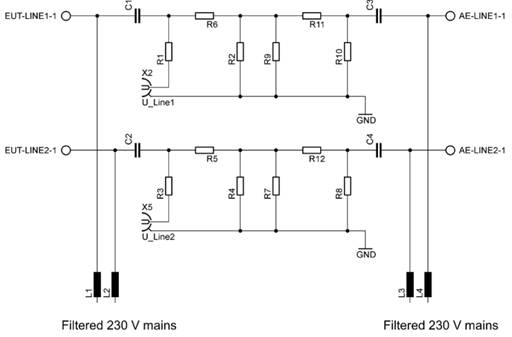
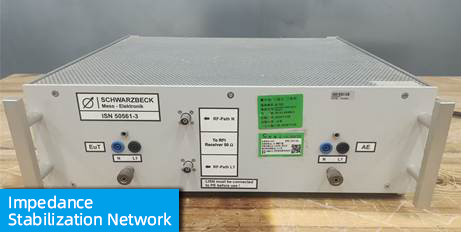
C. Limit
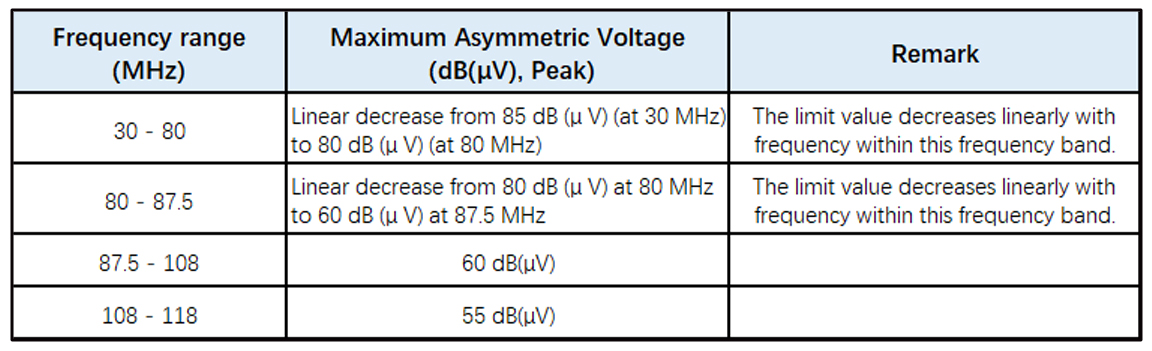
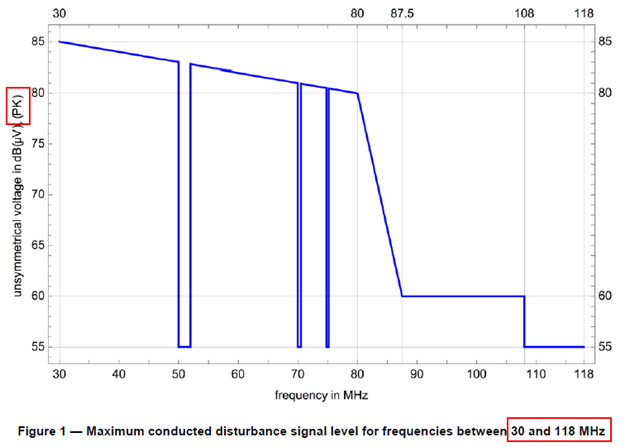
a. There are clear limitations on the maximum asymmetric voltage (measured by peak detectors) of the transmitted signal within the range of 30 MHz to 118 MHz, as shown in Table 1. At the same time, it should be noted that the maximum symmetrical voltage value is 6 dB higher than the corresponding maximum asymmetrical voltage.
Table 1- Maximum Asymmetric PLC Transmission Signal Levels in the 30 MHz to 118 MHz Range.
b. Key frequency band exclusion requirements
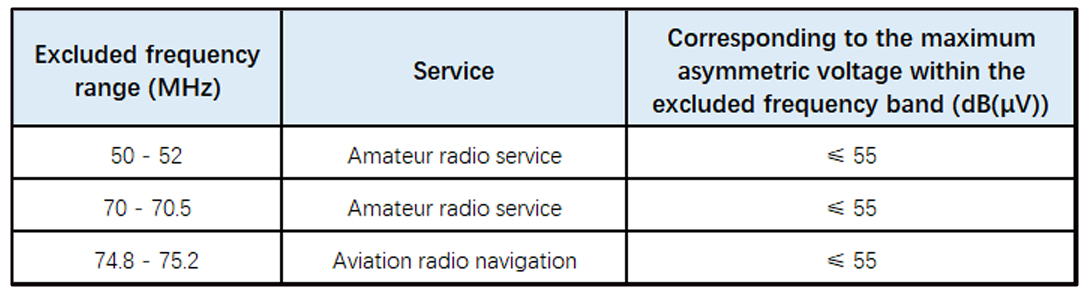
To ensure compatibility with other radio services on adjacent frequencies, frequency exclusion zones have been set up within the range of 30 MHz to 87.5 MHz for key services such as amateur radio and aviation radio navigation (as shown in Table 2). Within these specified frequency bands, the maximum asymmetric voltage of the PLC transmission signal must be ≤ 55 dB (μ V).
Table 2-30 Permanent exclusion frequency range and related services between MHz and 87.5 MHz
Note: The selected frequency is intended to ensure that wireless devices operating in the same environment as expected can function properly. In some countries (such as police/fire departments/security service agencies), additional frequency restrictions may be required.
c. Based on the description of the above limit requirements, the following limit values can be established:
BTL has extensive experience in the field of electromagnetic compatibility (EMC) testing and has established a professional technical service team equipped with multiple complete sets of EMC testing equipment. We strictly follow the standard requirements and have comprehensive electromagnetic compatibility testing capabilities for PLC power line communication equipment projects. We can quickly respond to customer needs and efficiently complete testing and report issuance.
The testing report issued by BTL can obtain dual authoritative recognition from the China National Accreditation Service for Conformity Assessment (CNAS) and the American Association for Laboratory Accreditation (A2LA), providing professional technical support for the research and development verification, international compliance certification, and market access of your PLC equipment.
Thank you for reading, BTL welcomes your call!!!
Related Reading:
Sharing| Electromagnetic compatibility testing of power line communication (PLC) equipment
Relevant information

EU Releases Exemption Guidelines on Removability and Replaceability of Portable and LMT Batteries — Multiple Product Categories Relief Granted
On July 14, 2026, the European Commission published the "Commission Guidelines to Facilitate the Harmonised Application of Provisions on the Removability and Replaceability of Portable and Light Means of Transport (LMT) Batteries" (Commission Notice C(2026) 5032 final). These guidelines aim to provide a uniform interpretative framework for the implementation of Article 11 of the EU Battery Regulat

6G Developments: Past, Present and Future
The formulation of 6G standards has entered a more concrete phase. At the 3GPP RAN Plenary Meeting held in Singapore in June 2026, the industry made progress in multiple key research areas and finalized the timeline for Release 21, which is regarded as the first standard version expected to formally define 6G.

Overview of EN IEC 61000-4-29:2026
The key focus of the 2026 edition is to address new DC power distribution environments, especially higher-voltage DC systems. It also clarifies test generator capability, duration tolerance, current limitation during short interruptions, inrush current verification, result evaluation, and test report requirements. For products using 24 Vdc, 48 Vdc, 380 Vdc, 400 Vdc, 800 Vdc, or other DC input pow