

Canada’s (ISED) website released the latest version CS-03, Part V, issue 9, amendment 3, Requirements and Test Methods for Magnetic Output from Handset Telephones for Hearing Aid Coupling and for Receive Volume Control on 2021/08/12.
This document will be in force upon publication on Innovation, Science and Economic Development Canada’s (ISED) website.
This latest version CS-03, Part V, dated August 2021 replaces CS-03, Part V, issue 9, amendment 2, dated January 2017.
The following are the main changes:
1. Removed Receiver Objective Loudness Rating (ROLR) requirements.
2. Updated receive volume control requirements to reference only ANSI/TIA-4965 (section 9).
3. Added additional test report requirements (section 10).
4. Made editorial changes and clarifications, as appropriate.
There are two test methods for receiving volume control items in the old standard. Our BTL has used the new one testing method in 2019. This change of test in latest version only removes the old method, so this standard update has no impact on our test. What is influential is the writing of the report. The following is a detailed description of what are the newly added additional test report requirements.
The newly added additional test report requirements are as follows:
In addition to the reporting requirements set forth in annex D of Terminal Attachment Program Procedure DC-01, the test report shall include:
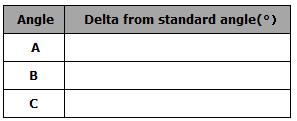
a) The handset position used during the testing (i.e. Standard Test Position (STP) or Recommended Test Position (RPT)). When the RPT is used, then the test report shall include:
MECRP (Manufacturer-defined Ear Cap Reference Point) (Delta from actual ECRP)
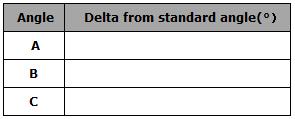
Angle settings

b) For digital and IP phones, the narrowband and wideband codec used during testing must be reported.
Relevant information

CRA Implementation Enters a Critical Phase
In August 2026, preparations for the implementation of the EU Cyber Resilience Act (CRA) entered a critical stage. With the reporting obligations set to take effect on September 11, 2026, drawing near, the European Commission and the European Union Agency for Cybersecurity (ENISA) have been intensively issuing implementation guidance and materials related to the single reporting platform.
Canada's ISED Officially Releases RSS-310 Issue 6: Major Updates to Radio Frequency Equipment Requirements
Innovation, Science and Economic Development Canada (ISED) has formally issued RSS-310, Issue 6, “Licence-Exempt Radio Apparatus: Category II Equipment,” replacing Issue 5, which has been in effect since 2020