

Since Apple released the iPhone that supports wireless charging, it has brought infinite vitality to the wireless charging market. In response to the current booming wireless charging market, there are more and more products that support wireless charging. Today we will popularize the FCC certification requirements for products that support wireless charging function.
The FCC certification regulations for wireless charging are FCC Part 15C § 15.209, and the frequency of use of the product must comply with the range of Part 15C § 15.205 (a), that is, devices authorized by Part 15 must not operate in the 90-110 kHz frequency band. In addition to meeting regulatory requirements, the product also needs to comply with the conditions of KDB680106. According to the new KDB (KDB680106 D01 Wireless Power Transfer v04) for wireless charging devices released on October 24, 2023, ECR is required!
ECR: The applicant submits consultation to the FCC official in accordance with KDB guidelines to obtain FCC authorization.
But the product can be exempted when it meets the following conditions:
(1)The power transfer frequency is below 1 MHz.
(2)The output power from each transmitting element (e.g., coil) is less than or equal to 15 watts.
(3)A client device providing the maximum permitted load is placed in physical contact with the transmitter (i.e., the surfaces of the transmitter and client device enclosures need to be in physical contact).(4)Only § 2.1091-Mobile exposure conditions apply (i.e., this provision does not cover § 2.1093-Portable exposure conditions).(5)The E-field and H-field strengths, at and beyond 20 cm surrounding the device surface, are demonstrated to be less than 50% of the applicable MPE limit, per KDB 447498, Table 1. These measurements shall be taken along the principal axes of the device, with one axis oriented along the direction of the estimated maximum field strength, and for three points per axis or until a 1/d (inverse distance from the emitter structure) field strength decay is observed. Symmetry considerations may be used for test reduction purposes. The device shall be operated in documented worst-case compliance scenarios (i.e., the ones that lead to the maximum field components), and while all the radiating structures (e.g., coils or antennas) that by design can simultaneously transmit are energized at their nominal maximum power.
(6)For systems with more than one radiating structure, the conditions specified in (5) must be met when the system is fully loaded (i.e., clients absorbing maximum power available), and with all the radiating structures operating at maximum power at the same time, as per design conditions. If the design allows one or more radiating structures to be powered at a higher level while other radiating structures are not powered, then those cases must be tested as well. For instance, a device may use three RF coils powered at 5 W, or one coil powered at 15 W: in this case, both scenarios shall be tested.
If one of the above does not meet the requirements, ECR needs to be run and the following information needs to be provided:
◆WPT operating frequency (or frequencies).
◆Conducted power for each radiating structure.
◆§ 2.1091-Mobile or § 2.1093-Portable demonstrated scenarios of operation, including RF exposure compliance information.
◆Maximum distance from the WPT transmitter at which, by design, a load can be charged (including slow-charging operations).
Notes:
1 When the FCC applies for part 18, whether following the SDoC or Certification procedures, ECR consultation must be submitted to the FCC. The same applies to the above exemption situations, and only after obtaining consent can it be considered a valid authorization; When the device still has data transmission function, it is necessary to apply for part 18+15 at the same time.
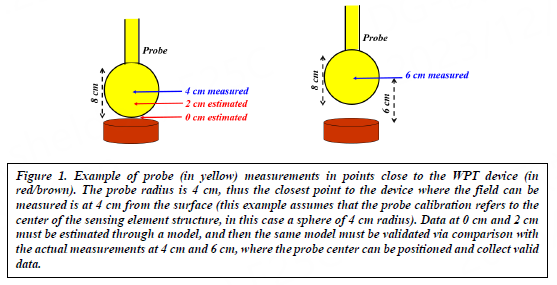
2 For the testing of RF exposure, if the field strength probe is not sufficiently small (the center of the probe sensing element is more than 5 mm from the outer surface of the probe), the results at 0mm need to be calculated according to the requirements of section 3.3, and for the 2cm and 4cm parts, calculate whether each test result is within a 30% deviation.
BTL now has the testing capability for FCC WPT and can provide ECR services. Manufacturers are welcome to contact BTL Group, and BTL will share the most professional and comprehensive certification information with you.
Relevant information

CRA Implementation Enters a Critical Phase
In August 2026, preparations for the implementation of the EU Cyber Resilience Act (CRA) entered a critical stage. With the reporting obligations set to take effect on September 11, 2026, drawing near, the European Commission and the European Union Agency for Cybersecurity (ENISA) have been intensively issuing implementation guidance and materials related to the single reporting platform.
Canada's ISED Officially Releases RSS-310 Issue 6: Major Updates to Radio Frequency Equipment Requirements
Innovation, Science and Economic Development Canada (ISED) has formally issued RSS-310, Issue 6, “Licence-Exempt Radio Apparatus: Category II Equipment,” replacing Issue 5, which has been in effect since 2020