

Canada has updated "RSS-102.SAR.MEAS - Measurement Procedure for Assessing Specific Absorption Rate (SAR) Compliance in Accordance with RSS-102."
Key updates are as follows:
1. new requirements and clarifications for time-averaged SAR (TAS) for algorithm approvals and final product implementations including wireless wide area networks (WWANs), wireless local area networks (WLANs), non-terrestrial networks (NTNs) and Bluetooth (BT)
2. new requirements on time-averaged absorbed power density (TA-APD) for WLAN devices operating in the 5925-7125 MHz
3. new requirement for TAS measurements allowed to be conducted with an array class 2 fast SAR system as per IEC/IEEE 62209-1528 and that is compliant with IEC 62209-3
4. clarified test procedure for foldable devices
5. new requirements for TAS foldable devices and spatially separated antennas.
6. new requirements for multiple TAS applications
7. new guidance for TAS motion sensor
8. new test method for devices with protrusions
9. made editorial changes and clarifications, as appropriate
BTL will assist you in explaining the impact of conventional SAR:
2. Time-averaged absorbed power density (TA-APD) for WLAN devices operating in the 5925-7125 MHz:
Absorbed Power Density (APD) testing is limited to the 5925MHz to 7125MHz frequency range.
The testing regulations must follow "RSS-102.APD.MEAS: Measurement procedure for assessing absorbed power density (APD) compliance in accordance with RSS-102," which is currently under official development.
TA-APD will be defined in Section 5.13 of the aforementioned regulations. Currently, measurements are performed according to Appendix G, and the device under test is specified in Appendix F.
4. Clarified test procedure for foldable devices
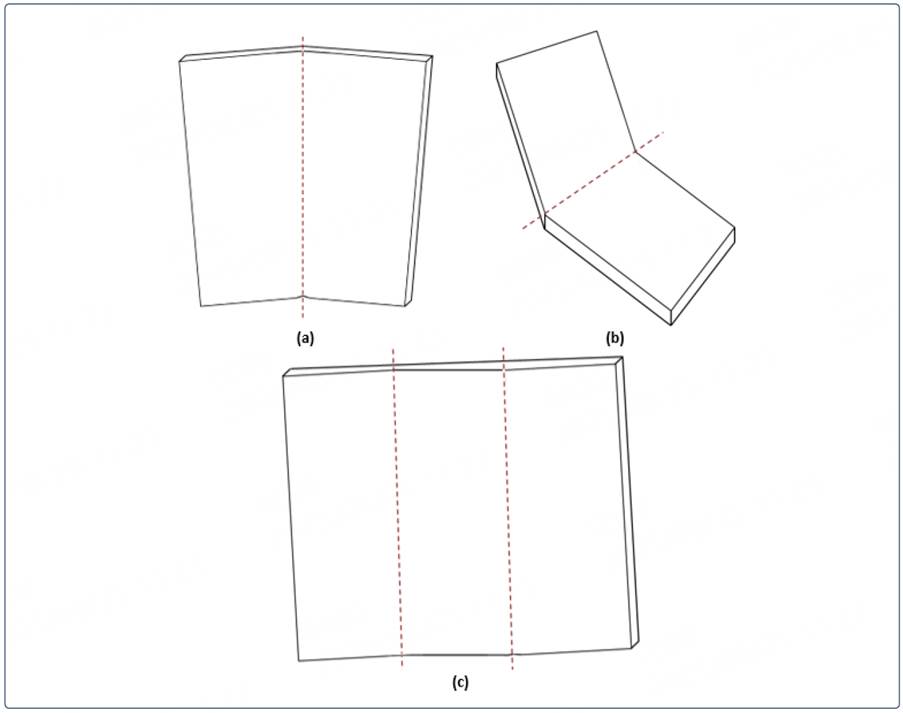
Foldable phones that support tablet or ultra-mobile personal computer (UMPC) mini-tablet operating characteristics shall continue to be assessed as follows:
a. foldable phones with a display or an overall diagonal dimension ≤ 20 cm, in open position, shall continue to be assessed less than or equal to 5 mm separation distance from the flat phantom for1 g body SAR
b. foldable phones with a display or an overall diagonal dimension > 20 cm, in open position, shall continue to be assessed at 0 mm separation distance from the flat phantom for 1 g body SAR
However, for compliance with ISED requirements, the provisions for separation distance up to 10 mm for certain dual display devices mentioned in KDB 941225 D07 do not apply. Inquiries to increase the separation distance to 10 mm for foldable phones will not be accepted by ISED.
8. New test method for devices with protrusions
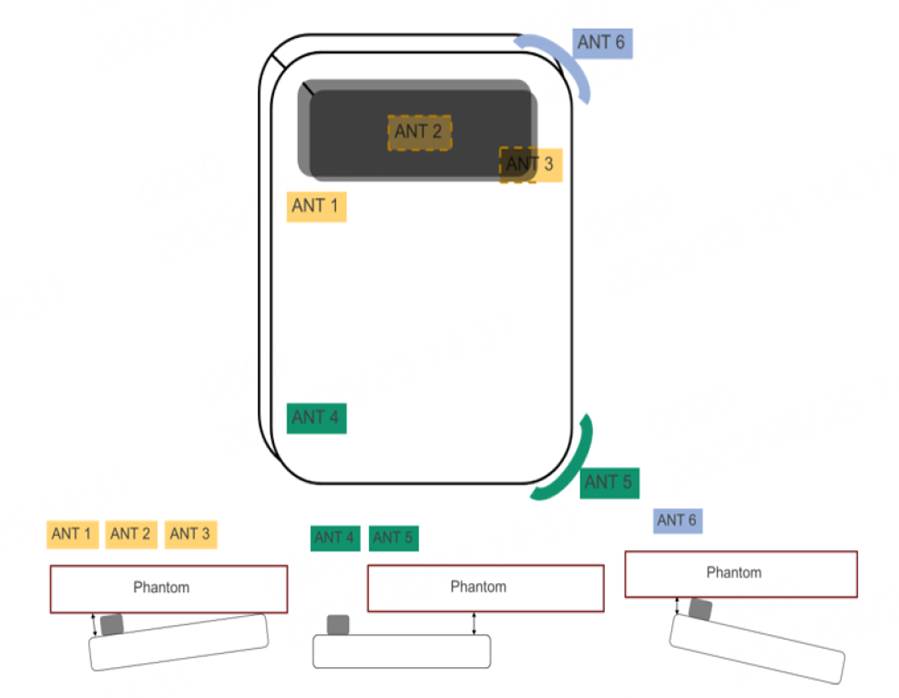
The preferred test method for devices with protrusions, such as an extruding camera module, is, whenever possible, to remove the protrusion creating the obstruction.
A protrusion shall not be removed if it contains metallic materials or if the removal of the protrusion may affect the RF characteristics of the EUT.
When it is not possible to remove the protrusion to perform the assessment, it is permitted to conduct the assessment by tilting the EUT in order for the measurement system probe to get as close as possible to the areas near the protrusion while maintaining a consistent separation distance. However, if the raised part does not affect the minimum distance stipulated by law under normal installation conditions, there is no need to install it in an inclined manner.
If you want to know more, you can contact BTL and BTL will explain and answer you.
Relevant information

CRA Implementation Enters a Critical Phase
In August 2026, preparations for the implementation of the EU Cyber Resilience Act (CRA) entered a critical stage. With the reporting obligations set to take effect on September 11, 2026, drawing near, the European Commission and the European Union Agency for Cybersecurity (ENISA) have been intensively issuing implementation guidance and materials related to the single reporting platform.
Canada's ISED Officially Releases RSS-310 Issue 6: Major Updates to Radio Frequency Equipment Requirements
Innovation, Science and Economic Development Canada (ISED) has formally issued RSS-310, Issue 6, “Licence-Exempt Radio Apparatus: Category II Equipment,” replacing Issue 5, which has been in effect since 2020