

The latest amendments to the TBL of the Telecommunications Services Act 2025:
The 2025 revision focuses on "Dual SIM Dual Standby Emergency Calls", "Emergency Cross-Carrier Roaming" and "IoT Security Enhancement", a total of three core sections:
Emergency call interconnection guarantee
Background of the problem:
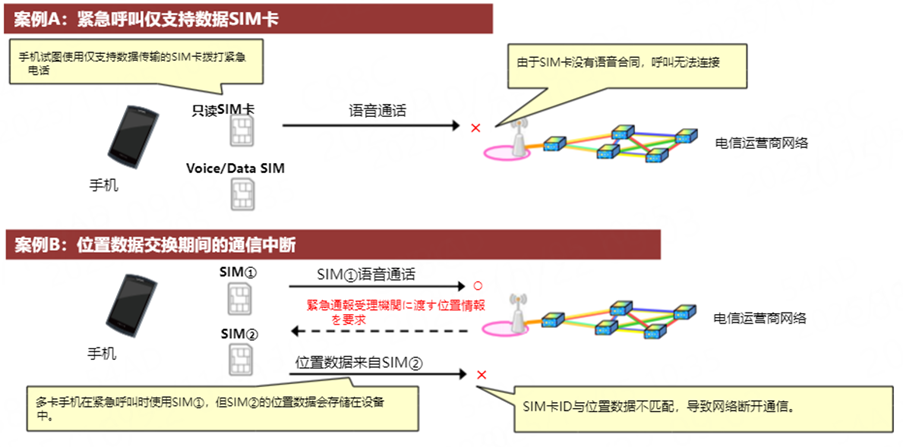
When a multi-SIM mobile device uses a "data-only SIM" to make an emergency call, the communication channel may be disconnected and the call may fail due to a mismatch between the SIM ID and the "Other SIM Location Data" stored by the device.
Revision requirements:
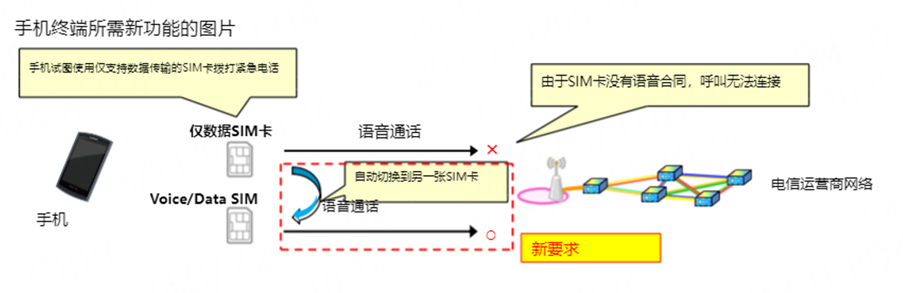
Device functions: If a multi-SIM device fails to make an emergency call using one SIM (e.g., data SIM does not have a voice contract), it needs to automatically switch to another SIM and try again.
Test method: Added multi-SIM device emergency call test method;
Effective Date: July 1, 2025 (Some test methods have been delayed until January 1, 2026 ).
Case Situation:
Revised Requirements:
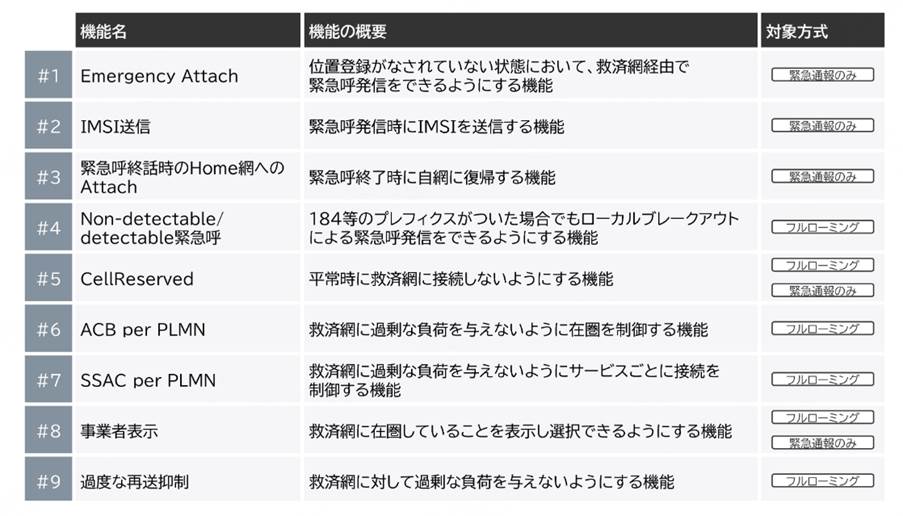
Emergency cross-carrier roaming Emergency JP-roaming test
Background and Objectives:
Background: The "Emergency Operator Roaming Study Group" was launched in September 2022, and a partial report on the technical requirements for terminal equipment was submitted in December 2024.
Goal: In the event of a natural disaster or operator network failure, users can temporarily use other operators' "rescue networks" to ensure voice, data communication, and emergency calls.
Key time nodes:
• Date of enactment: May 29, 2025 ;
• Effective Date: October 1, 2025;
• Grace Period: Grace period for some provisions (technically difficult equipment) until September 30, 2027
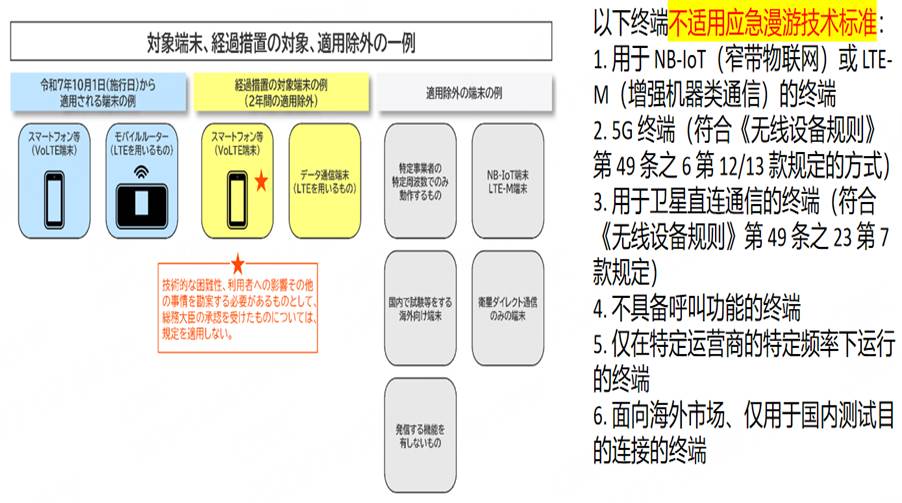
Article 32-24-2 has been added to the Terminal Equipment Rules).
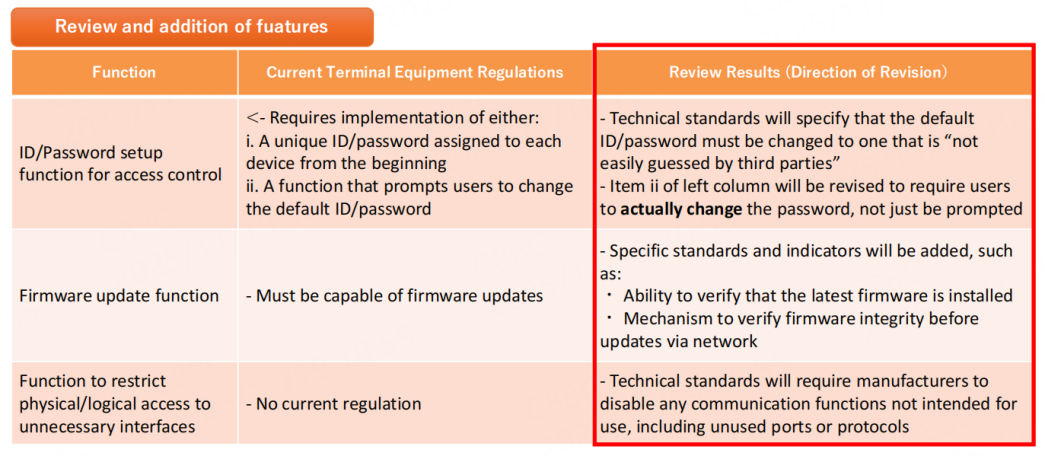
IoT Security Enhancement
JC-STAR is a voluntary security compliance assessment system for Internet of Things (IoT) products developed by Japan's Ministry of Economy, Trade and Industry (METI) and Information-technology Promotion Agency (IPA) starting from the 2022 fiscal year. Its labeling was officially launched in March 2025. This system aims to help enterprises demonstrate the security of their IoT products (such as cameras, routers, etc.) by formulating security standards and assessment procedures, so as to address the growing problem of IoT devices being hijacked for cyber attacks (e.g., DDoS attacks).
In the revision of IoT device security standards under Japan's Telecommunications Business Act, the compliance standards of JC-STAR have been adopted as an important reference. For instance, the revision direction clearly states that the specific indicators of technical standards should "not deviate significantly from JC-STAR's compliance standards," ensuring coordination and consistency between mandatory security standards and the industry's voluntary certification system. The launch of this system also represents a key measure for Japan to align with international trends in the field of IoT security, such as the United States' Cyber Trust Mark and Singapore's Cybersecurity Labelling Scheme.
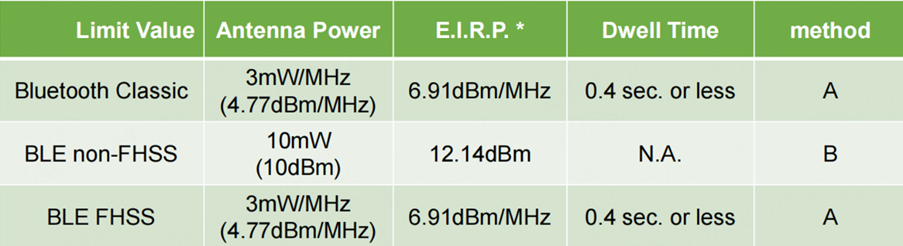
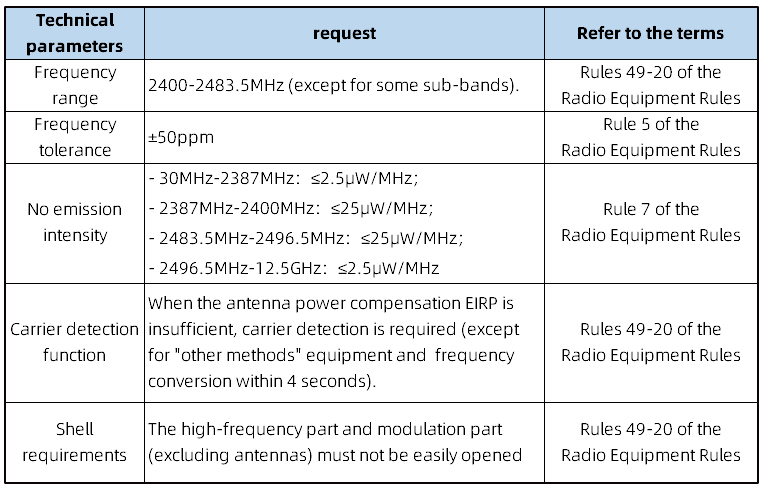
2.4GHz SRD technical requirements
Key power and time limits
Test method description:
• Method A: Measure the average power (thermal sensor or RMS power sensor) at frequency hopping, divided by the widened bandwidth corresponding to 90% of the total power;
• Method B : Fixed transmit frequency, directly measure the average power.
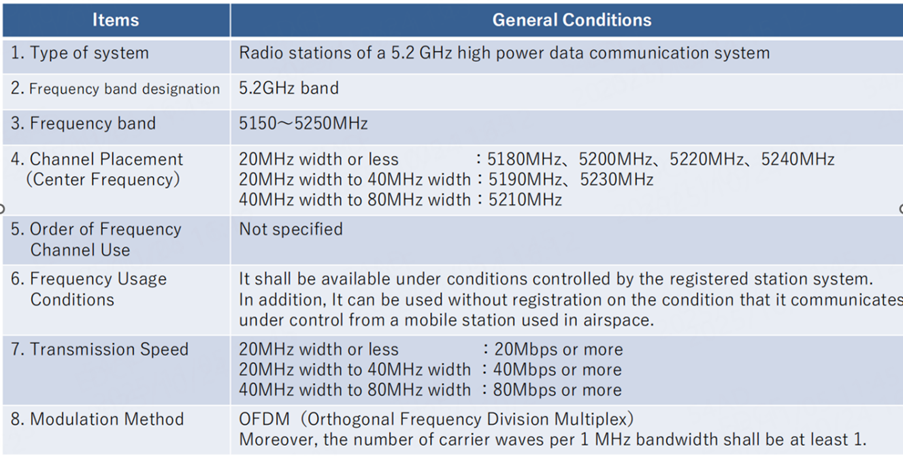
5.2GHz band wireless LAN
Demand-driven: The demand for high-definition video transmission from drones and other devices has increased, requiring the deployment of 5 GHz wireless LAN in the airspace.In April 2025, the technical standards were revised to allow over-the-air use in the 5.2 GHz band.
Band restrictions:5.3 GHz and 5.6 GHz are still prohibited from using the air due to the risk of radar interference, and only 5.2 GHz (5150~5250 MHz, 200 MHz bandwidth) is open.
Technical Parameters:
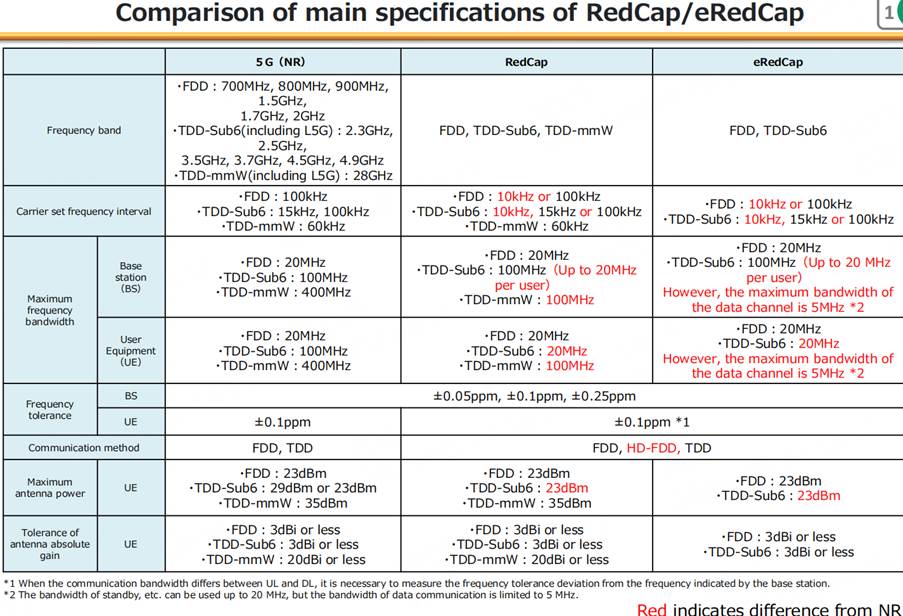
RedCap/eRedCap
Demand growth:IoT devices are expected to grow 3.9 times in the 2020s, with broadband IoT accounting for 62%, requiring low-power, low-speed 5G technology.
Standardization:RedCap (supports 150 Mbps) and eRedCap (optimized to 10 Mbps) are standardized by 3GPP, with technical requirements implemented in April 2025.
Comparison of key parameters:
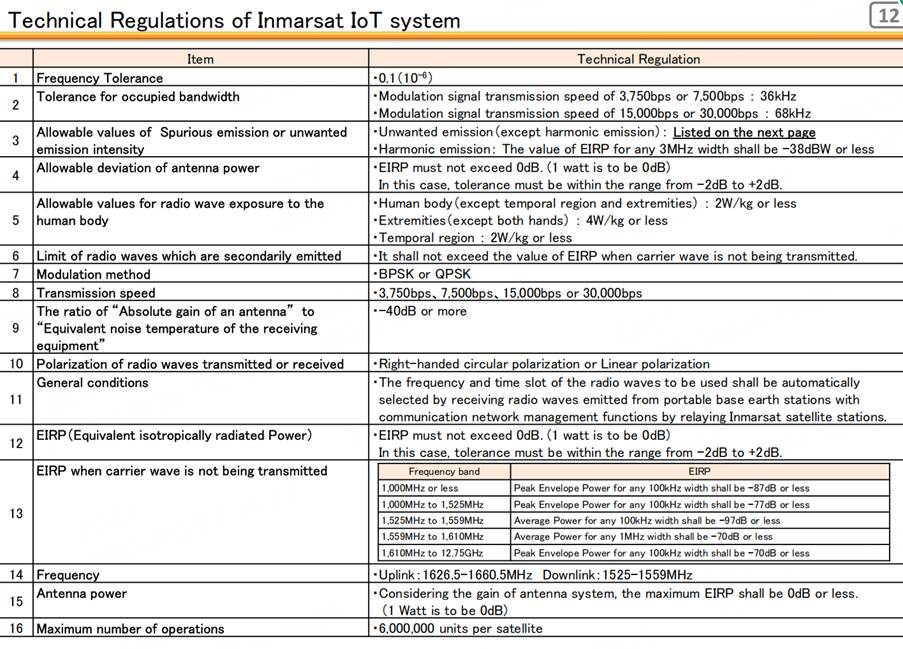
Inmarsat IoT System
System architecture
Satellite and frequency band:Compatible with 3GPP satellite NB-IoT standard, using Inmarsat satellites, 1626.5-1660.5 MHz uplink and 1525-1559 MHz downlink.
Technical parameters
Relevant information

CRA Implementation Enters a Critical Phase
In August 2026, preparations for the implementation of the EU Cyber Resilience Act (CRA) entered a critical stage. With the reporting obligations set to take effect on September 11, 2026, drawing near, the European Commission and the European Union Agency for Cybersecurity (ENISA) have been intensively issuing implementation guidance and materials related to the single reporting platform.
Canada's ISED Officially Releases RSS-310 Issue 6: Major Updates to Radio Frequency Equipment Requirements
Innovation, Science and Economic Development Canada (ISED) has formally issued RSS-310, Issue 6, “Licence-Exempt Radio Apparatus: Category II Equipment,” replacing Issue 5, which has been in effect since 2020