

Brief Introduction of Battery IEC/EN62133 Test
According to the resolution of IECEE AAG (AAG/563/DSH), from April 15, 2008, single or portable rechargeable batteries consisting of general alkaline or non-acidic electrolytes, such as lithium batteries and alkaline batteries, should not only meet the requirements of product standards of related products, but also meet the requirements defined in battery standards IEC/EN62133. In fact, EN 62133 and IEC 62133 test projects are the same, but EN is the European Union's IEC is an international standard.
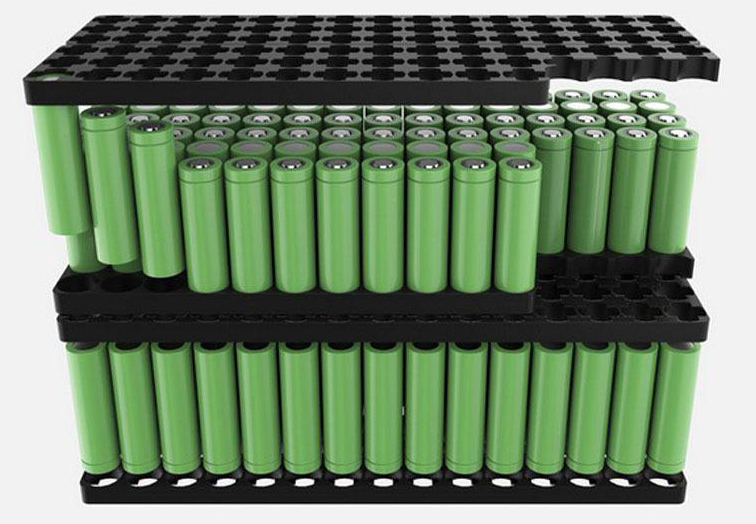
IEC/EN62133 is the most important international standard for lithium-ion batteries in the world, and also an important basis for IECEE-CB certification. At present, Japan, Korea, Thailand, India and other countries have adopted IEC62133 to formulate their own national standards, which have become an important basis for market access of these countries.
IEC/EN62133 standard mainly includes the following items:
Cell: Continuous low-rate charging, vibration, Thermal test, external short circuit, free fall, impact (collision), thermal misuse (thermal shock), extrusion, low pressure, overcharge, forced discharge, high-rate charging protection function (lithium system), labeling and packaging, incorrect installation (nickel system).
Battery: Vibration, Moulded case stress at high ambient temperature, temperature cycle, external short circuit, free fall, impact (collision), labeling and packaging, overcharging (nickel system).
1.Vibration test
Specific requirements: The battery vibrates when it is fully charged, with an amplitude of 0.76mm, and at the frequency of 1HZ/MIN, under the condition of 10HZ~55HZ (10HZ~55HZ~10HZ is a cycle), the battery can be restored within 90±5 minutes.
2. Moulded case stress at high ambient temperature
Specific requirements: Batteries should be placed above 7H at 70±2℃, and then at room temperature.
3. Thermal test
Specific requirements: After the following five cycles, the rechargeable battery is placed for 7 days to check whether the battery has exploded, ignited and leaked. The first step is to place the battery at 70± 2℃ for 4 hours. The second step is to place the battery at 70 ±2 ℃for 4 hours. The instrument will drop the temperature to 20 ±5℃ within 30 MIN, and test the third step is to reduce the temperature to - 20± 2℃ The instrument will raise the temperature to 20± 5℃ in 30 MIN. Under this condition, test for 2 hours and step 5: Repeat the above four steps four times for a large cycle.
4. External short circuit
Specific requirements: Two groups of charged batteries are placed at 20 ±5℃ or 55 ±5℃ respectively, each battery suffers short circuit with internal resistance less than<5 mΩ. Batteries are tested 24 hours or until the temperature drop exceeds 20% of the maximum temperature during short circuit, and the test are over.
5. Free fall
Specific Requirements: Batteries fall freely from a height of 1 meter to concrete floor. Each tested battery falls once on each side and three times on each side.
Relevant information

EU Releases Exemption Guidelines on Removability and Replaceability of Portable and LMT Batteries — Multiple Product Categories Relief Granted
On July 14, 2026, the European Commission published the "Commission Guidelines to Facilitate the Harmonised Application of Provisions on the Removability and Replaceability of Portable and Light Means of Transport (LMT) Batteries" (Commission Notice C(2026) 5032 final). These guidelines aim to provide a uniform interpretative framework for the implementation of Article 11 of the EU Battery Regulat

6G Developments: Past, Present and Future
The formulation of 6G standards has entered a more concrete phase. At the 3GPP RAN Plenary Meeting held in Singapore in June 2026, the industry made progress in multiple key research areas and finalized the timeline for Release 21, which is regarded as the first standard version expected to formally define 6G.

Overview of EN IEC 61000-4-29:2026
The key focus of the 2026 edition is to address new DC power distribution environments, especially higher-voltage DC systems. It also clarifies test generator capability, duration tolerance, current limitation during short interruptions, inrush current verification, result evaluation, and test report requirements. For products using 24 Vdc, 48 Vdc, 380 Vdc, 400 Vdc, 800 Vdc, or other DC input pow