

[real stuff] What are the certification requirements for FCC Wi-Fi 6E VLP devices?
In order to spur an eco-system of cutting-edge applications, including augmented and virtual reality (AR/VR), wearable sensors and technologies, and variety of Internet of Things devices, that will help businesses, enhance learning opportunities, advance healthcare opportunities, and bring new entertainment experiences, the FCC proposed the implementation of Very Low Power (VLP) devices in the Wi-Fi 6E frequency band at the end of September last year, and updated § 15.407 in early March this year, adding relevant requirements for VLP devices. Subsequently, in early April of this year, the FCC updated and released a draft version of KDB 987594, mainly adding content related to VLP devices for public review and comments, with comments ending on May 3rd. This indicates that manufacturers will soon be able to apply for FCC Wi-Fi 6E VLP device certification.
Do you want to know what to pay attention to when applying for certification of FCC Wi-Fi 6E VLP devices?
So don't miss out on the following content:
>> Equipment classes <<
Prior to the release of the new KDB, FCC Wi-Fi 6E supported a total of 7 device categories, such as 6ID: Low Power Indoor Access Point and 6XD: Indoor Clients. For the newly added VLP devices, their device category is defined as 6VL, and their connection relationship is shown in the following figure:
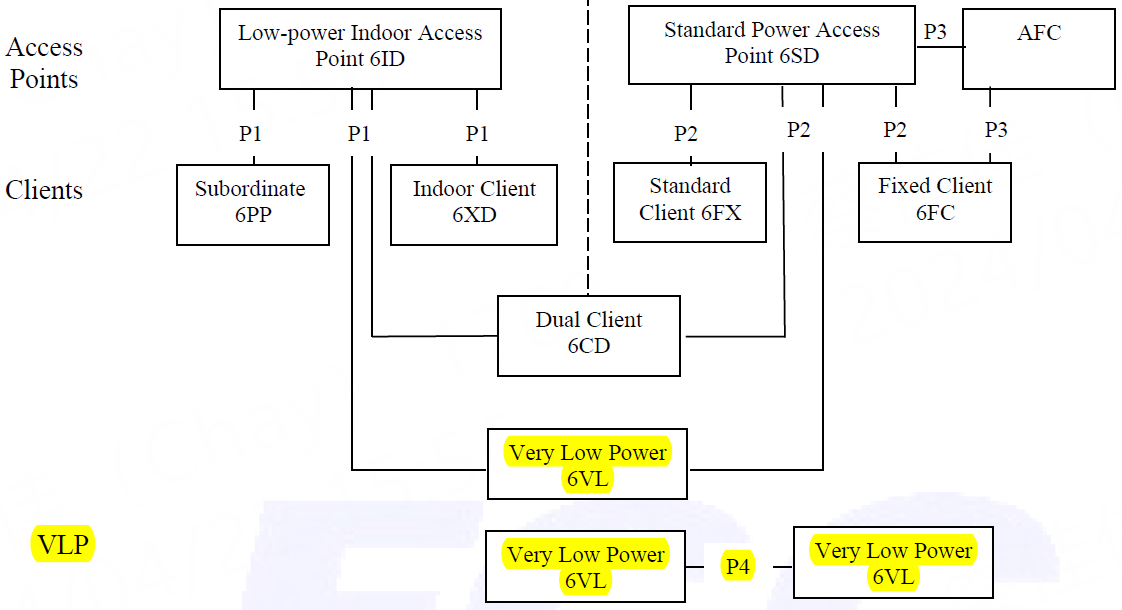
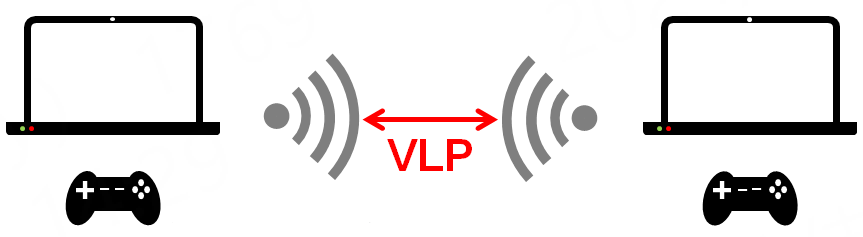
From the above relationship diagram, it can be seen that VLP devices can not only be connected to APs, but also allow them to communicate directly with other VLP devices. This method is conducive to achieving lower latency communication and effective utilization of increased frequency, and is more suitable for the following usage scenarios (examples):
- Share visuals with each other in the game.
- Mirror to the TV monitor.
- Game controller.
- AR/VR devices.
- Exchange security keys between devices.
>> Technical Requirements <<
To apply for FCC Wi-Fi 6E VLP device certification, it is necessary to know the technical requirements that are allowed and limited, as shown in the following figure:
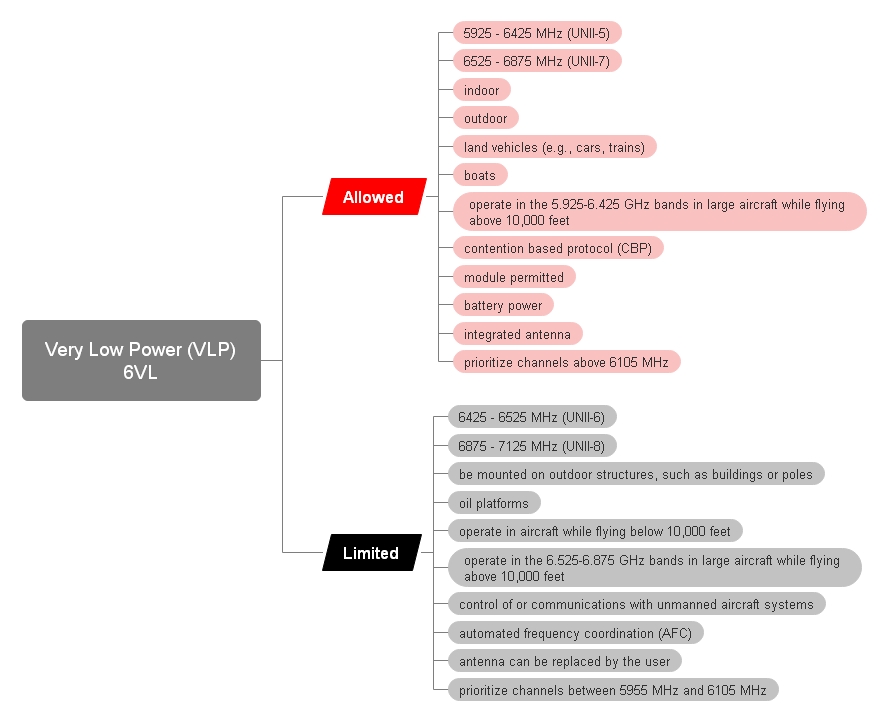
In addition to conventional certification requirements (such as Label, FCC ID, etc.), additional attention should be paid to the following certification matters for the above technical requirements:
1. The device user manual must contain the following information:
- The operation of this device is prohibited on oil platforms and aircraft, except that operation of this device in 5.925-6.425 GHz is permitted in large aircraft while flying above 10,000 feet.
- Installation on outdoor fixed infrastructure is prohibited.
2. Device Protocol Attestation Statement to be submitted during the certification process:
- Statement that this device will prioritize spectrum above 6.105 GHz (provide details on how this is implemented).
- Statement that this device will use Transmit Power Control (TPC). Provide details on mechanisms that trigger TPC (for example, environment, performance, bandwidth, etc.).
3. Statement acknowledging device restrictions to be submitted during the certification process:
- Operation is prohibited on oil platforms and aircraft, except that operation of this device in 5.925-6.425 GHz is permitted in large aircraft flying above 10,000 feet.
>> Test Items <<
The most important aspect of FCC Wi-Fi 6E VLP device certification is the test report, which needs to include the following test items:
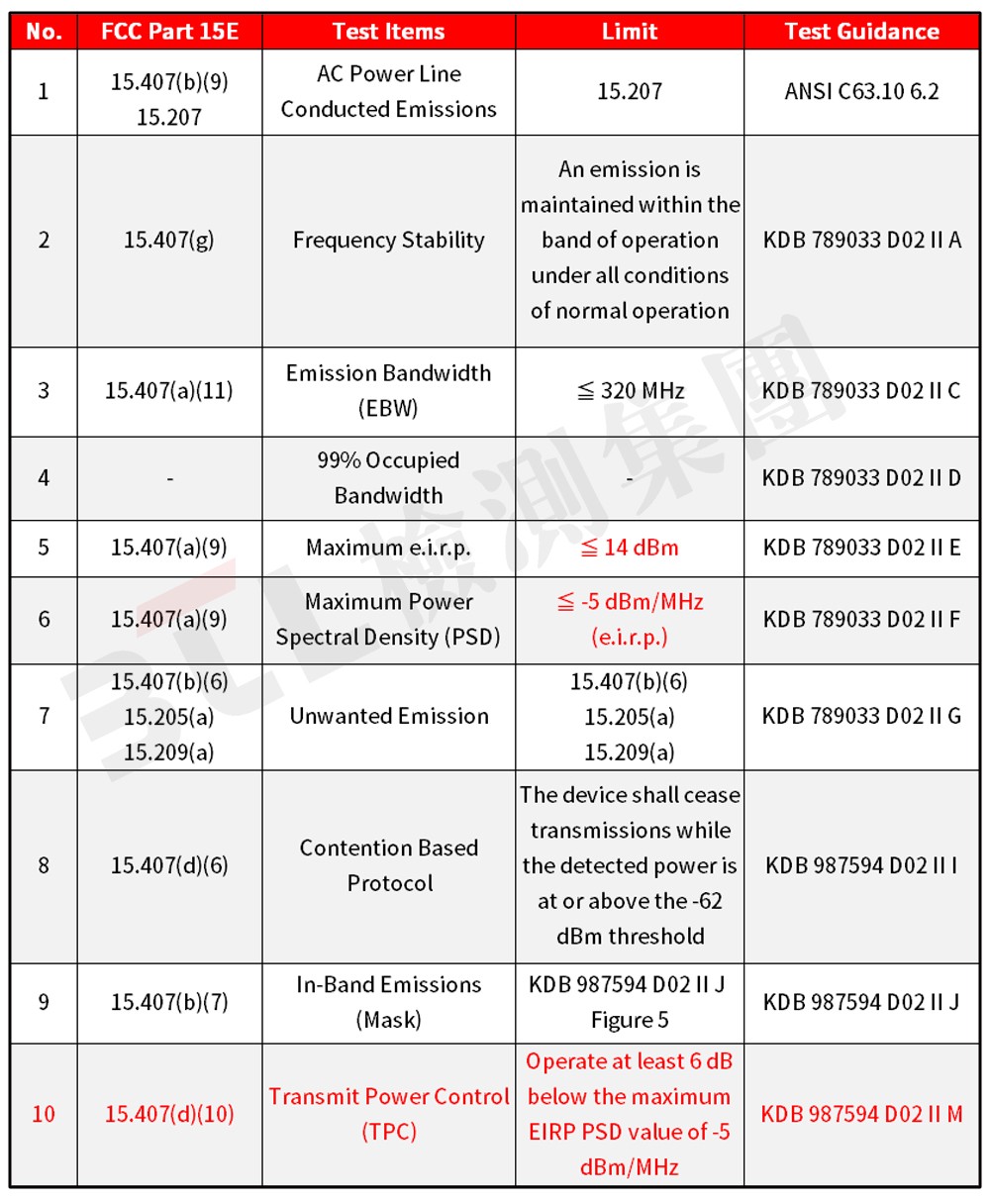
Most of the above testing items and requirements are the same as other Wi-Fi 6E equipment classes, with a focus on the red font. The power and PSD requirements of VLP devices are very strict, and there is a special requirement, namely TPC, which requires the manufacturer's assistance in providing a method to trigger this function for testing.
The above content is based on the currently publicly available draft version of KDB 987594. If there are significant changes in the subsequent official version, we will study and share it with everyone as soon as possible. If manufacturers have plans to produce Wi-Fi 6E VLP devices and want to sell them to the United States, you can refer to the above content and prepare in advance. After the FCC KDB releases the official version, you can start certification.
BTL has been deeply involved in the field of mandatory Wi-Fi certification for many years and has rich certification experience. BTL now has the testing capability for FCC Wi-Fi (Wi-Fi 2.4G/Wi-Fi 5G/Wi-Fi 6E), including VLP devices. Welcome manufacturers to contact the BTL team, and BTL will share the most professional and comprehensive certification information with you.
Relevant information

EU Releases Exemption Guidelines on Removability and Replaceability of Portable and LMT Batteries — Multiple Product Categories Relief Granted
On July 14, 2026, the European Commission published the "Commission Guidelines to Facilitate the Harmonised Application of Provisions on the Removability and Replaceability of Portable and Light Means of Transport (LMT) Batteries" (Commission Notice C(2026) 5032 final). These guidelines aim to provide a uniform interpretative framework for the implementation of Article 11 of the EU Battery Regulat

6G Developments: Past, Present and Future
The formulation of 6G standards has entered a more concrete phase. At the 3GPP RAN Plenary Meeting held in Singapore in June 2026, the industry made progress in multiple key research areas and finalized the timeline for Release 21, which is regarded as the first standard version expected to formally define 6G.

Overview of EN IEC 61000-4-29:2026
The key focus of the 2026 edition is to address new DC power distribution environments, especially higher-voltage DC systems. It also clarifies test generator capability, duration tolerance, current limitation during short interruptions, inrush current verification, result evaluation, and test report requirements. For products using 24 Vdc, 48 Vdc, 380 Vdc, 400 Vdc, 800 Vdc, or other DC input pow