

SparkLink comes on, BTL assists in SparkLink certification
When it comes to wireless short-range communication technology, people first think of BT, Wi-Fi, NFC, UWB and other wireless technologies. However, since 2021, a new wireless short-range communication technology has emerged, which is SparkLink. Its emergence makes wireless short-range communication more colorful, and it has lower power consumption, faster speed, lower latency, more stable connection, wider coverage, and larger networking advantages than traditional wireless short-range communication. It can carry data interaction in application scenarios such as smart cars, smart terminals, smart homes, and smart manufacturing.
Let's take a look at the technical specifications and certification of SparkLink.
1. Two types of access technology for SparkLink
1.1 Basic access technology (SparkLink Basic, SLB), benchmarking Wi-Fi technology.
1.2 Low power access technology (SparkLink Low Energy, SLE), benchmarking BT technology
Description: The " SparkLink " technology combines the best features of Bluetooth and Wi-Fi, and can be used simultaneously with Bluetooth and Wi-Fi. " SparkLink " has low-power, lightweight connectivity similar to Bluetooth, while also meeting high-speed, high-volume data transmission and high-quality connectivity requirements like Wi-Fi.
2. Technical Specifications of SparkLink
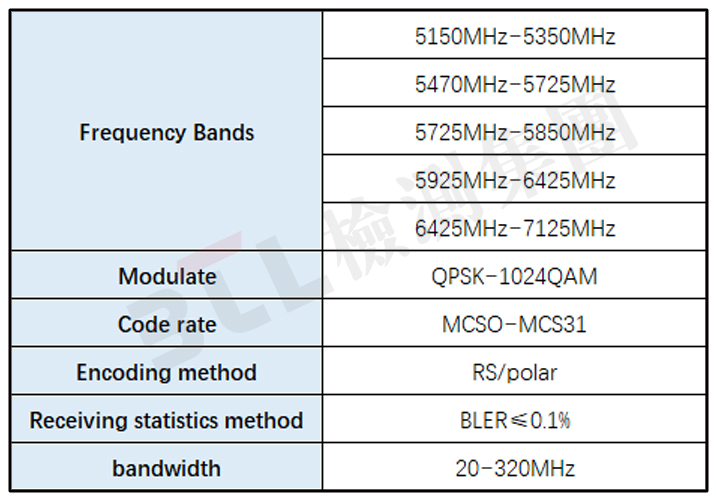
We can quickly understand the SLB and SLE RF technology specifications from the following table:
SLB ▽▽▽
SLE ▽▽▽
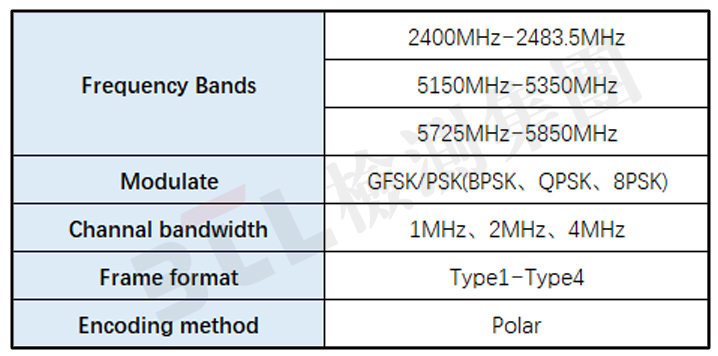
Due to the SLB product not being available on the market yet, we provide the following specifications for the SLE:
Its support operating frequency band is 2400MHz-2483.5MHz, 5150MHz-5350MHz, and 5725MHz-5850MHz.
It uses single carrier frequency hopping method for data transmission, and channel bandwidth supports 1MHz, 2MHz, and 4MHz.
It uses low-cost and low-power GFSK waveform, and also supports QPSK modulation waveform and 8PSK modulation waveform to meet the high-speed transmission requirement and support high-order services.
3. Certification of SparkLink
Star Flash certification is divided into regulatory certification and alliance certification.
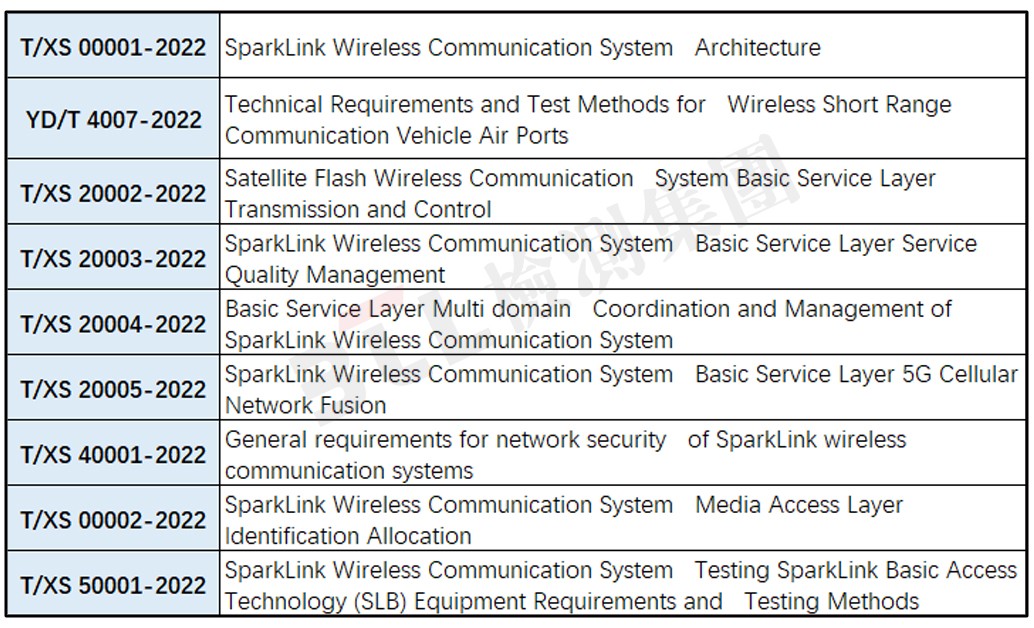
3.1 Alliance certification
The following projects have been certified by the Alliance, and according to the latest progress, they have reached version 2.0. According to the introduction, the SparkLink standard 2.0 series has completed the SparkLink end-to-end protocol system, providing a more complete communication foundation and richer application standards, fully supporting SparkLink native audio and video, human-computer interaction, positioning and other applications.
3.2 Regulation certification
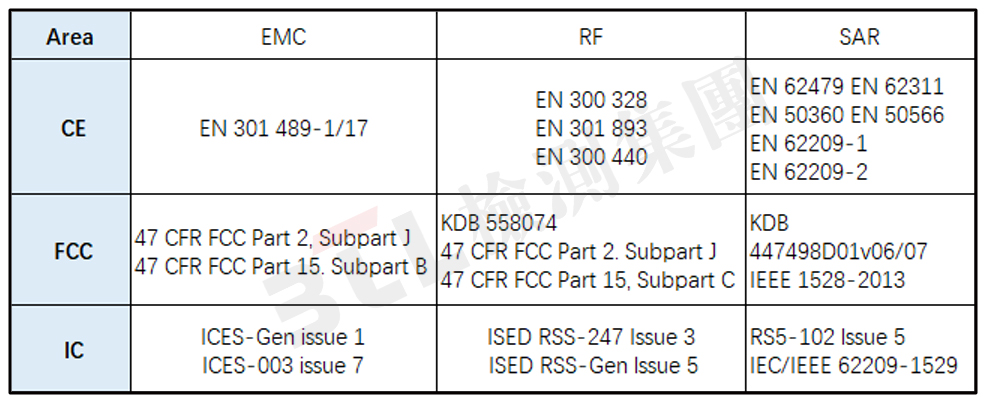
Currently, SLE is still using unlicensed bands, which are the same as those used by BT/Wi-Fi. Therefore, the certification regulations are also the same as those for BT/Wi-Fi, as shown in the following table:
4. Materials Required for Testing
The materials required for testing include: fixed frequency transmission commands, frequency hopping transmission commands, receiver commands, waveform files, and blocking test scripts.
5. BTL's testing capability
BTL now has the regulatory certification testing capability of SparkLink SLE (SLB is still in the development stage and has not yet been launched). We can also provide certification services for the following RF functions: BT, Wi-Fi 2.4G, Wi-Fi 5G, Wi-Fi 6E, Wi-Fi 7, and mobile communication 2/3/4/5G. Welcome customers to contact the BTL team, and BTL will share the most professional and comprehensive certification information with you.
Relevant information

EU Releases Exemption Guidelines on Removability and Replaceability of Portable and LMT Batteries — Multiple Product Categories Relief Granted
On July 14, 2026, the European Commission published the "Commission Guidelines to Facilitate the Harmonised Application of Provisions on the Removability and Replaceability of Portable and Light Means of Transport (LMT) Batteries" (Commission Notice C(2026) 5032 final). These guidelines aim to provide a uniform interpretative framework for the implementation of Article 11 of the EU Battery Regulat

6G Developments: Past, Present and Future
The formulation of 6G standards has entered a more concrete phase. At the 3GPP RAN Plenary Meeting held in Singapore in June 2026, the industry made progress in multiple key research areas and finalized the timeline for Release 21, which is regarded as the first standard version expected to formally define 6G.

Overview of EN IEC 61000-4-29:2026
The key focus of the 2026 edition is to address new DC power distribution environments, especially higher-voltage DC systems. It also clarifies test generator capability, duration tolerance, current limitation during short interruptions, inrush current verification, result evaluation, and test report requirements. For products using 24 Vdc, 48 Vdc, 380 Vdc, 400 Vdc, 800 Vdc, or other DC input pow