

Interpretation | EMC Standard - Electrical Lighting Equipment CISPR 15:2024, Explore New Changes!!!
The testing range for RE radiation has changed in this update! To learn more about the updated content, read this article and see if you can find the answer you are looking for?
The editor has read CISPR 15:2024 for you in advance and found that the differences between these two versions do involve testing scope and testing methods.
Now let the editor learn about it with you!!!
1. Update of testing scope
I believe you are not unfamiliar with the RE radiation testing scope of CISPR 15:2018, right?
So let's compare:
Table 12- Overview of standardized radiated disturbance measurement methods
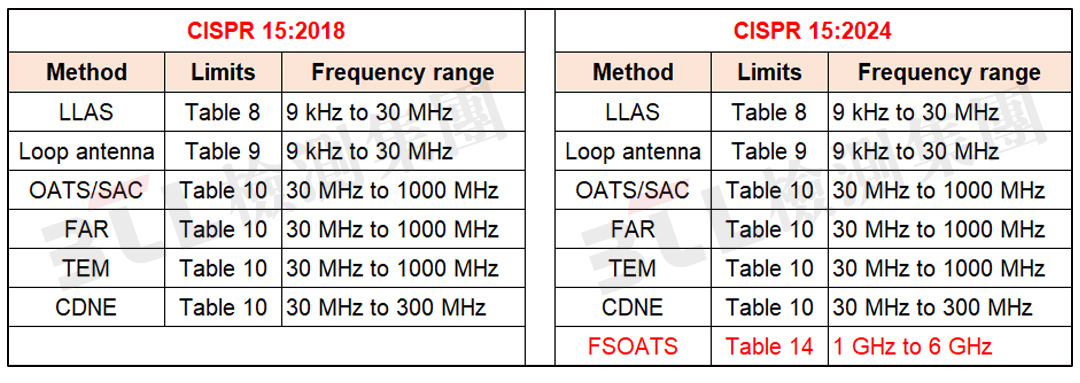
As shown in Table 12 of the above two versions, the RE radiation test range of CISPR 15:2018 can reach up to 1GHz;
The testing range of CISPR 15:2024 has been expanded to 6GHz.
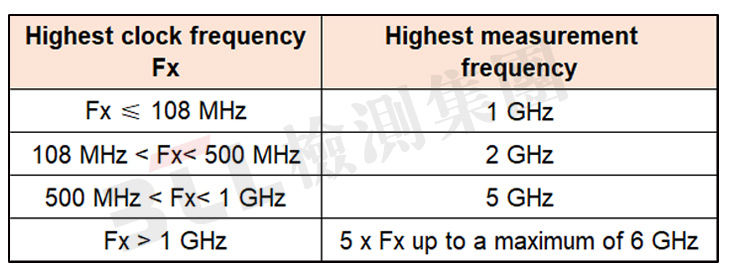
According to the description in section 4.5.4 of CISPR 15:2024 standard, the testing range of EUT needs to be determined based on the working clock frequency, as shown in Table 13: (Fx is the working Highest clock frequency of EUT)
Table 13- Radiated measurement highest frequency
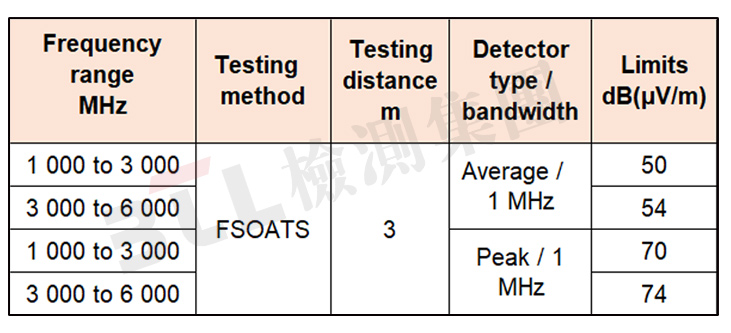
Let's take a look at the requirements for the limit values again, as shown in Table 14:
Table 14 - Radiated disturbance requirements at frequencies above 1 GHz
2. The voltage probe method for conducting interference measurement on local wired ports outside the ELV lamp power supply interface has been cancelled.
* * * Attention * * *
◆ Port: Cancelled are local wired ports other than the ELV lamp power supply interface;
◆ Test method: Voltage probe method.
Let's take a look at how the standard (redline version is more intuitive) is reflected, asfollows:
Table 11- Overview of standardized conducted disturbance measurement methods
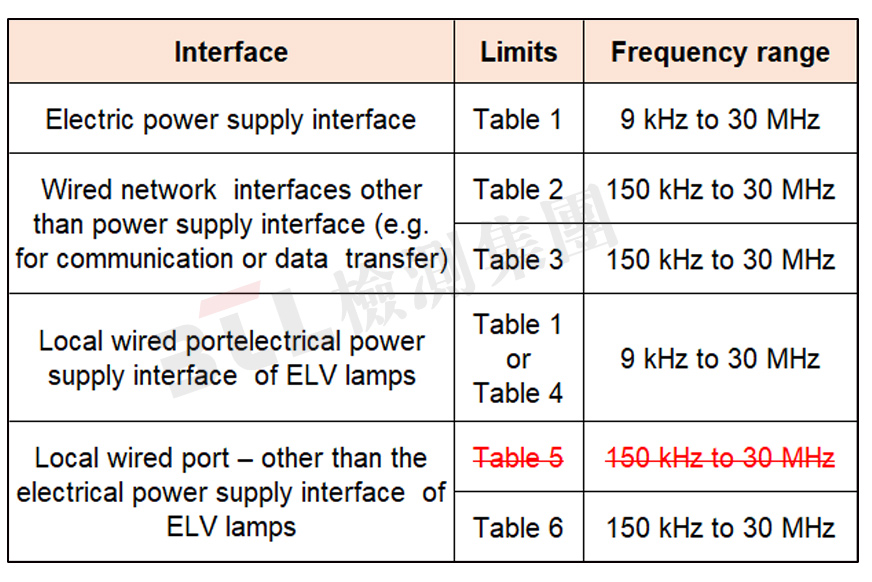
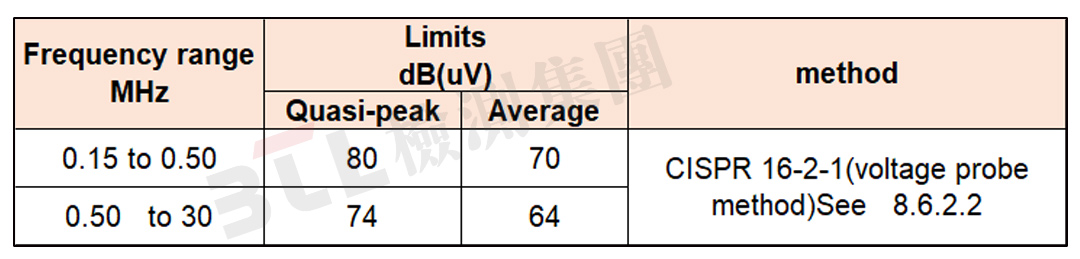
From Table 11 above, it can be seen that the testing requirements in Table 5 have been removed, and Table 5 corresponds to the following table:Disturbance voltage limits at local wired ports: local wired ports other than electrical power supply interface of ELV lamp.
Table 5- Disturbance voltago limits at local wirod ports: local wirod ports other than electrical power supply interface of ELV lamp
3. The test set-up for the conical metal housing for single capped lamps has been rotated
the conical metal housing for single capped lamps……?? ……rotated?
Are you also like the editor, unable to remember at once??
Don't worry, let's compare the standards of the two versions:
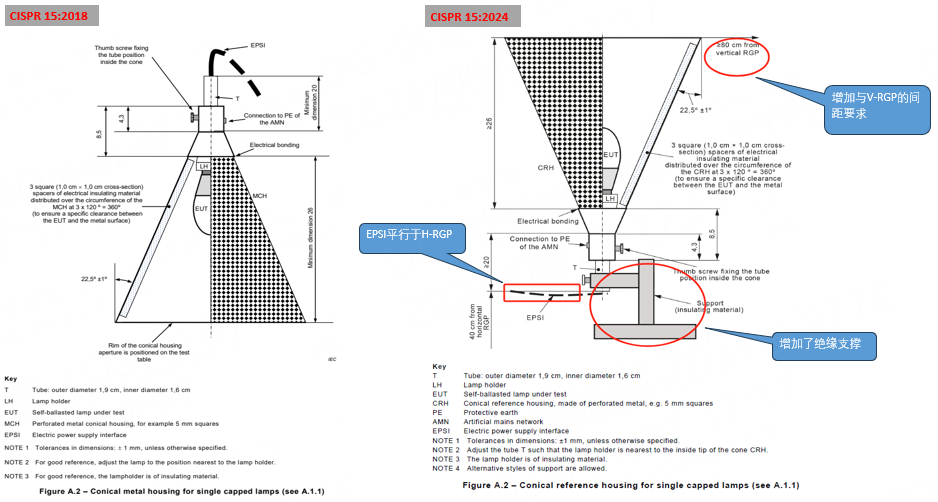
Do you remember? This' single ended lamp conical metal shell testing device 'is required for conducting conductivity tests when the EUT is a single ended lamp.
If it's not a single ended lamp or Conducted disturbance testing, then there's no need to consider.
By comparison, it appears that the "single ended lamp conical metal shell testing device" has indeed undergone rotation; The editor has summarized the requirements briefly as follows:
◆ The conical metal shell testing device was rotated 180 ° with the opening facing upwards.
◆ An insulation support has been added below the conical metal shell testing device to fix the metal shell, so that EPSI is parallel to the horizontal reference ground plane and spaced 40cm apart.
◆ The shell of the conical metal shell also needs to be at least 80cm away from the vertical reference ground plane.

By now, I believe you have gained some understanding of the important information regarding the changes between CISPR 15 2024 and the previous version.
There has some other subtle changes in the standard changes. I'm thirsty, that's all for now.
We have an EMC engineering team of over 60 people in the South China region as a strong backing, with abundant site resources, complete qualifications, rich project experience,
and the ability to efficiently handle multiple projects in parallel. We will do our best to complete the project you entrusted to us; We will do our best to answer your questions.
Thank you for reading. BTL welcomes your call!!!
Do you want to learn more about the new standards? Please contact us as soon as possible.
Relevant information

EU Releases Exemption Guidelines on Removability and Replaceability of Portable and LMT Batteries — Multiple Product Categories Relief Granted
On July 14, 2026, the European Commission published the "Commission Guidelines to Facilitate the Harmonised Application of Provisions on the Removability and Replaceability of Portable and Light Means of Transport (LMT) Batteries" (Commission Notice C(2026) 5032 final). These guidelines aim to provide a uniform interpretative framework for the implementation of Article 11 of the EU Battery Regulat

6G Developments: Past, Present and Future
The formulation of 6G standards has entered a more concrete phase. At the 3GPP RAN Plenary Meeting held in Singapore in June 2026, the industry made progress in multiple key research areas and finalized the timeline for Release 21, which is regarded as the first standard version expected to formally define 6G.

Overview of EN IEC 61000-4-29:2026
The key focus of the 2026 edition is to address new DC power distribution environments, especially higher-voltage DC systems. It also clarifies test generator capability, duration tolerance, current limitation during short interruptions, inrush current verification, result evaluation, and test report requirements. For products using 24 Vdc, 48 Vdc, 380 Vdc, 400 Vdc, 800 Vdc, or other DC input pow