

Appendix P of IEC 62477-1- Expansion of the EMF Capability of Power Electronic Conversion Systems
In recent years, with the continuous growth of electricity demand, the level of exposure to man-made electromagnetic fields has been steadily increasing. Whether in households or workplaces,the human body is constantly exposed to complex weak electric fields and magnetic fields. Long-term low-intensity exposure may trigger biological reactions and affect the health of the human body.Therefore, restrictions on the low-frequency radiation from these "artificial sources" are imperative.
The IEC 62477-1 standard is a general safety standard for low-voltage power electronic equipment (PECS), covering all electrical energy conversion devices with AC ≤ 1000V and DC ≤ 1500V. The EMF in the Appendix P section of this standard is a newly added mandatory chapter in IEC 62477-1:2022. It was referenced by the EU LVD Directive (2014/35/EU) and became a mandatory requirement for CE certification. Additionally, it provides frequency limits within the range of 0Hz - 10MHz:
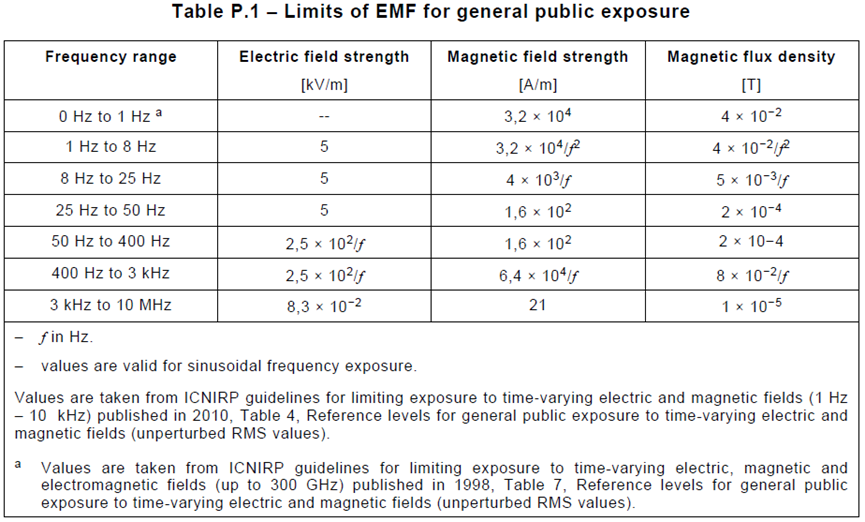
The electromagnetic field limit values for public areas are shown in Table P.1;
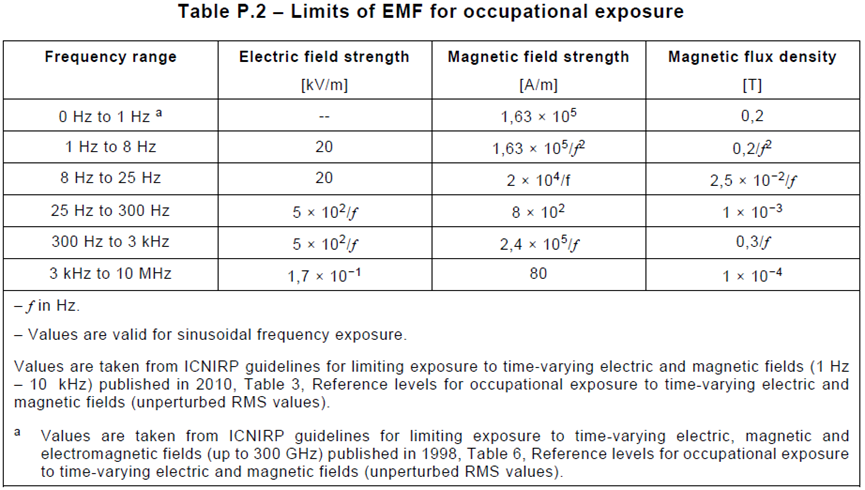
The electromagnetic field limit values for general areas, service areas and restricted areas are shown in Table P.2;
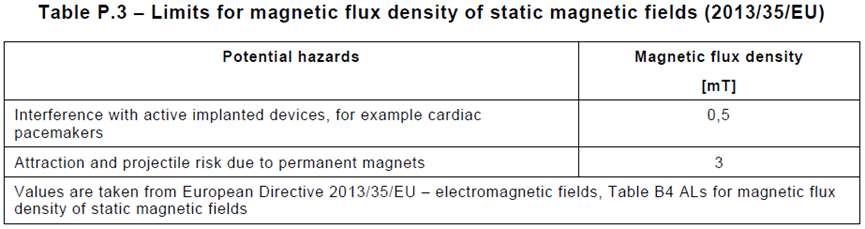
The limits for magnetic flux density for transportation and storage are shown in Table P.3;
The BTL Shanghai Laboratory, based on its traditional electromagnetic compatibility testing and certification capabilities, has added test equipment from the Spanish professional instrument manufacturer,covering all frequency band testing items in Appendix P of IEC 62477-1, including electric field strength, magnetic field strength, and magnetic flux density. At the same time, the instruments have built-in standard limit values,providing convenient testing and certification services for all friends. Please feel free to inquire.
Relevant information

EU Releases Exemption Guidelines on Removability and Replaceability of Portable and LMT Batteries — Multiple Product Categories Relief Granted
On July 14, 2026, the European Commission published the "Commission Guidelines to Facilitate the Harmonised Application of Provisions on the Removability and Replaceability of Portable and Light Means of Transport (LMT) Batteries" (Commission Notice C(2026) 5032 final). These guidelines aim to provide a uniform interpretative framework for the implementation of Article 11 of the EU Battery Regulat

6G Developments: Past, Present and Future
The formulation of 6G standards has entered a more concrete phase. At the 3GPP RAN Plenary Meeting held in Singapore in June 2026, the industry made progress in multiple key research areas and finalized the timeline for Release 21, which is regarded as the first standard version expected to formally define 6G.

Overview of EN IEC 61000-4-29:2026
The key focus of the 2026 edition is to address new DC power distribution environments, especially higher-voltage DC systems. It also clarifies test generator capability, duration tolerance, current limitation during short interruptions, inrush current verification, result evaluation, and test report requirements. For products using 24 Vdc, 48 Vdc, 380 Vdc, 400 Vdc, 800 Vdc, or other DC input pow