

Indonesia SDPPI implemented the new technical standard for Short-range Devices (SRD) on August 11, 2024
Indonesia's General Directorate of Post and Information Resources and Equipment (SDPPI) has implemented Decree NO. 260 of 2024 (KEPMEN KOMINFO No. 260 TAHUN 2024) on the technical standard for Short Range Devices (SRD) on August 11, 2024. Compared to the old SRD technical regulation (Decree No. 161 of 2019), the new regulation has a wider coverage,the new technical regulations cover a variety of SRD types.
The new technical regulations cover a variety of SRD types, including but not limited to:
l Bluetooth (see IEEE 802.15.1)
Definition: Bluetooth is a wireless technology standard used to interconnect devices over short distances.
Application: Widely used for wireless connection between mobile phones, headphones, speakers, computers and other devices.
Features: Low power consumption, high compatibility, easy to use.
l Near Field Communication (NFC)
Definition: NFC is a short-range wireless communication technology that allows contactless data exchange between electronic devices.
Applications: mobile payment, access control system, bus card, etc.
Features: safe, fast and convenient.
l Radio Frequency Identification (RFID)
Definition: RFID automatically identifies target objects and obtains relevant data through radio waves.
Applications: logistics tracking, inventory management, animal tracking, etc.
Features: recognition distance, recognition speed, recognition accuracy is high.
l Ultra Wideband (UWB)
Definition: UWB is a short-range wireless technology that provides high-speed data transmission.
Applications: indoor positioning, high-speed data transmission, etc.
Features: Wide band width, high data transmission rate, strong anti-interference ability.
l Low rate wireless personal area Network (IEEE 802.15.4)
Definition: IEEE 802.15.4 is a low-rate, low-power wireless personal area network standard.
Applications: Smart home, industrial automation, etc.
Features: Low cost, low power consumption, easy to deploy.
l Cordless telephone
Definition: A cordless telephone is a landline telephone system that does not require a wire connection.
Application: Home, office and other places of wireless communication.
Features: High call quality, strong mobility.
l Wireless Power Transmission (WPT)
Definition: WPT is the non-contact transmission of power through electromagnetic fields.
Applications: Smart home device charging, electric vehicle wireless charging, etc.
Features: convenient, efficient and safe.
l Intelligent Transportation System (ITS)
Definition: ITS is a traffic management application that integrates information and communication technology.
Applications: traffic monitoring, traffic signal control, vehicle navigation, etc.
Features: Improve traffic efficiency, reduce traffic congestion, improve safety
l Telecommunications tools and equipment transmitting power less than 10mw
Definition: This type of device refers to a wireless communication device that transmits less than 10 milliwatts of power.
Applications: Low power devices such as small sensors and remote controls.
Features: Low power consumption, easy integration, suitable for long working hours.
The new regulations specify the frequency range and technical specifications corresponding to various types of equipment, while drawing on standardized testing procedures in the United States and Europe. In particular, cutting-edge technologies such as UWB cordless phones, WPT wireless power transmission and ITS intelligent transportation systems have been given new frequency band resources.
1. Radio Frequency Identification (RFID) :
New frequency bands: 433-434.79 MHz and 2400-2483.5 MHz
Purpose: For the identification and tracking of items.
2. Ultra-broadband (UWB) :
New frequency bands: 3.1-3.4 GHz, 3.4-3.8 GHz, 3.8-6.0 GHz, 6.0-8.5 GHz, 8.5-10.6 GHz
Purpose: To provide high-speed data transmission and accurate positioning.
3. Wireless Personal Area Network (WPAN) :
New frequency bands: 314-316 MHz, 433-434.79 MHz, 920-923 MHz
Purpose: For short range wireless communication, such as Bluetooth devices.
4. Wireless Power Transmission (WPT) :
New frequency bands: 100-119 KHz, 119-135 KHz, 135-140 KHz, 140-148.5 KHz, 6765-6795 KHz
Purpose: Wireless transmission of electric energy.
5. Intelligent Transportation System (ITS) :
New frequency bands: 5725-5850 MHz, 5850-5925 MHz, 5855-5925 MHz, 24-24.25 GHz, 76-77 GHz
Usage: Used for traffic management and vehicle communication to improve traffic efficiency and safety.
6. Cordless phone:
New frequency bands: 44-50 MHz, 2400-2483.5 MHz
Purpose: To provide wireless call function within a certain range
7. Hearing aid:
Frequency band: 169.400-169.475 MHz
Purpose: To help the hearing impaired receive sound better.
8. Medical equipment:
Frequency bands: 216-217 MHz and 402-405 MHz
Usage: Wireless communication in the medical field, such as remote monitoring and diagnosis.
9. Radar sensor equipment:
Frequency band: 57-64 GHz
Purpose: Used to detect and measure the distance, speed and other parameters of the object.
The new technical regulations cover multiple types of SRDS, and these devices play an important role in various fields. With the continuous development of technology, the application scenarios of SRD will also continue to expand, bringing more convenience to people's lives. Therefore, manufacturers and importers need to pay close attention to changes in regulations to ensure that products comply with the latest technical standards and power limits in order to facilitate the smooth entry of products into the Indonesian market.
SDPPI certification application method and related notes:
SDPPI certification application method:
Obtaining the Indonesian Radio and Communication Equipment Compliance Certification (SDPPI) is a key step in market access for Short range wireless communications (SRD) products planned for the Indonesian market. There are two ways to apply for SDPPI certification:
1.Direct testing: The applicant can send the product sample directly to the local laboratory in Indonesia designated by SDPPI for comprehensive testing including frequency, transmission power, electromagnetic compatibility (EMC) and electrical safety.
2.Approved report transfer: Applicants can choose SDPPI officially recognized overseas laboratory for testing, submit the test report for transfer. For some products with special ports or functions, samples need to be provided to local testing (such as SAR testing, laser testing, performance testing, etc.) At present, BTL Group has covered HKT and non-HKT products are SDPPI overseas accredited laboratory qualifications, which can provide enterprises with optimized certification schemes.
Attention after certification:
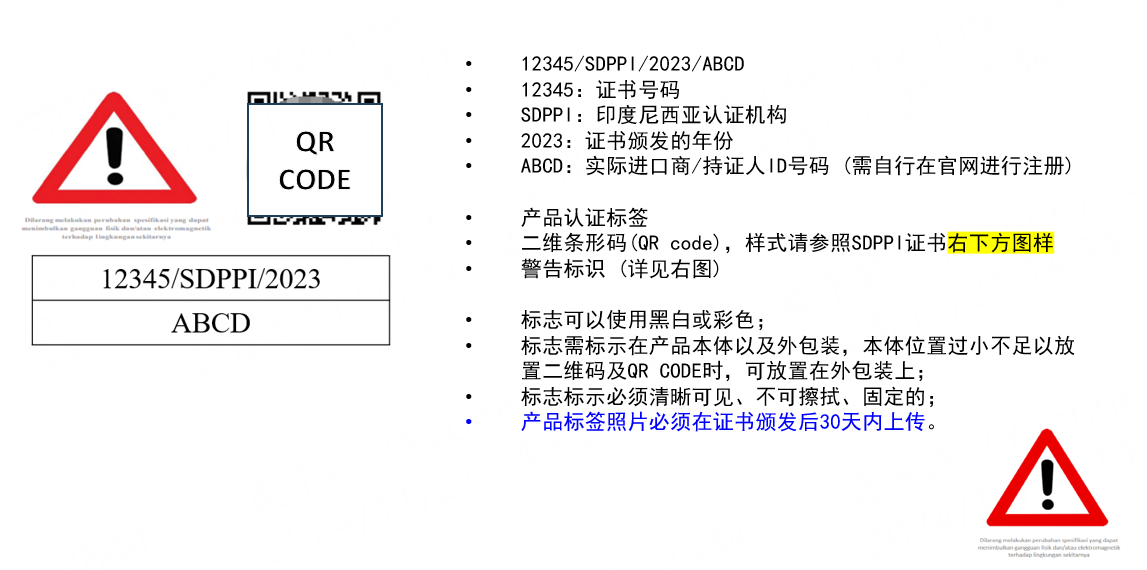
1. Label and identification: After obtaining the SDPPI certificate, the SDPPI certification mark needs to be marked on the product, and it needs to be uploaded to the certification system within 30 days after the certificate is issued.
2. certificate validity: SDPPI certification is valid for 3 years, if there is still import demand after the expiration, it needs to be re-certified, no renewal.
Relevant information

CRA Implementation Enters a Critical Phase
In August 2026, preparations for the implementation of the EU Cyber Resilience Act (CRA) entered a critical stage. With the reporting obligations set to take effect on September 11, 2026, drawing near, the European Commission and the European Union Agency for Cybersecurity (ENISA) have been intensively issuing implementation guidance and materials related to the single reporting platform.
Canada's ISED Officially Releases RSS-310 Issue 6: Major Updates to Radio Frequency Equipment Requirements
Innovation, Science and Economic Development Canada (ISED) has formally issued RSS-310, Issue 6, “Licence-Exempt Radio Apparatus: Category II Equipment,” replacing Issue 5, which has been in effect since 2020