

Analysis of relevant test requirements for sound pressure
With the increasing number of wearable listening devices, in order to reduce damage to the eardrum, it is necessary to limit the maximum sound pressure level emitted by the device. For this reason, IEC 62368-1 (CNS 15598-1), Chapter 10.6, has established safety protection for sound energy.
Applicable products (personal music players (PMPs) designed for general use and including headphones used together) that:
- Designed to allow users to listen to audio or audiovisual content/materials; and
- Use listening devices such as headphones or headsets that can be worn on or around the ears; and
- Have a wearable player (sized to fit in a pocket) and allow the user to move around when used continuously (e.g. on the street, in the subway, in the airport, etc.).
Common playback devices: MP3 audio players, mobile phones/PDAs with MP3 functions
The sound energy of players is graded from low to high into three levels: RS1, RS2, and RS3 (RS1 is the safest, RS3 is the most dangerous):
A. Set equipment (player plus listening device):
RS1: ≤ 85 dB(A)
RS2: ≤ 100 dB(A)
RS3: > RS2 dB(A)
B. Single player analog output (e.g. 3.5mm audio connector):
RS1: ≤ 27 mV
RS2: ≤ 150 mV
RS3: > RS2 mV
C. Single player digital output (e.g. USB-C audio connector)
RS1: ≤ -25 dBFS
RS2: ≤ -10 dBFS
RS3: > RS2 dBFS
Listening device requirements (headphones, earphones):
A. Listening device with wired analog input (e.g. wired 3.5mm terminal earphone):
When the earphone sound pressure value output is 94 dB (A), the input voltage value of the earphone is ≥75mV
B. Listening device with wired digital input (e.g. wired USB-C terminal earphone):
≤ 100 dB(A)
C. Wireless listening device (e.g. Bluetooth earphone):
≤ 100 dB(A)
Test:
Set equipment (player plus listening device)
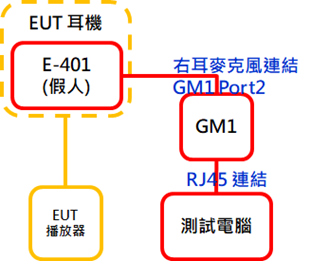
Before the test, the test standard signal "HD483" file must be placed in the EUT (player) for testing.
During the test, the noise reduction system of the test equipment must be turned off, the volume is adjusted to the maximum, and the tone is adjusted to the position where the headphones reach the maximum sound pressure. The test will be repeated five times, and the test result of the maximum sound pressure level will be taken as the average value.
Single player
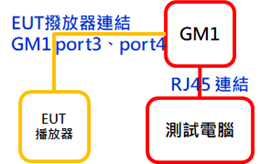
Before starting the test, please confirm that the EUT player is playing the standard sound source and setting the maximum volume.
The test will be repeated five times and the test results will be averaged.
Listening device with wired analog input
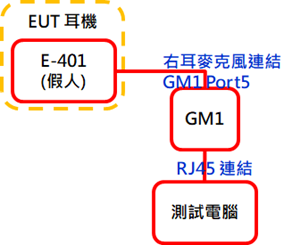
The actual test voltage output value is gradually increased to meet the output of 94dB.
The test will be repeated five times and the test results will be taken as the average value
Listening device with wired digital input/Wireless listening device
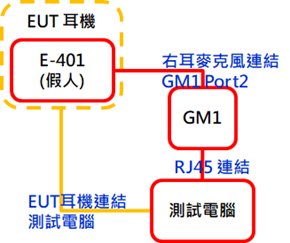
Before starting the test, please confirm that the test computer is connected to the EUT and the player is at maximum volume.
The test will be repeated five times and the test results will be averaged.
BTL currently has the testing capabilities of CNS 15598-1 10.6 section, EN 50332-1 (CNS 15027-1), and EN 50332-2 (CNS 15027-2). It can provide complete testing services for manufacturers and issue test reports with relevant qualifications to enable products to enter the market smoothly. Welcome to call BTL Safety Division for consultation.
Relevant information

EU Releases Exemption Guidelines on Removability and Replaceability of Portable and LMT Batteries — Multiple Product Categories Relief Granted
On July 14, 2026, the European Commission published the "Commission Guidelines to Facilitate the Harmonised Application of Provisions on the Removability and Replaceability of Portable and Light Means of Transport (LMT) Batteries" (Commission Notice C(2026) 5032 final). These guidelines aim to provide a uniform interpretative framework for the implementation of Article 11 of the EU Battery Regulat

6G Developments: Past, Present and Future
The formulation of 6G standards has entered a more concrete phase. At the 3GPP RAN Plenary Meeting held in Singapore in June 2026, the industry made progress in multiple key research areas and finalized the timeline for Release 21, which is regarded as the first standard version expected to formally define 6G.

Overview of EN IEC 61000-4-29:2026
The key focus of the 2026 edition is to address new DC power distribution environments, especially higher-voltage DC systems. It also clarifies test generator capability, duration tolerance, current limitation during short interruptions, inrush current verification, result evaluation, and test report requirements. For products using 24 Vdc, 48 Vdc, 380 Vdc, 400 Vdc, 800 Vdc, or other DC input pow