

1. B and H – Magnetic Concepts
Magnetic Flux Density (B, in Tesla):
- Refers to the magnetic field generated inside a coil by an external current.
- Also known as the induced magnetic field.
- Can be converted to/from magnetic field strength (H) under specific conditions.
Magnetic Field Strength (H, in A/m):
- Refers to the intensity of the magnetic field in space.
- Measured using a loop antenna and calculated from its characteristics.
2. Relationship Between Electric Field and Magnetic Field
dBuV/m = dBpT + 49.5 dB
3. Relationship Between H and B
dBuA/m = dBpT - 2 dB
Definition of Magnetic Antenna Coefficient:
Factor(H) = H / VR
Where:
- H = Magnetic field strength (A/m)
- VR = Antenna output voltage (V)
Unit Analysis:
(A/V)/m = (1 / Ω)/m = S/m
Logarithmic form (dB scale):
dBA/m = dBS/m + dBV
4. Magnetic Permeability and Field Conversion
B = μ₀ × H, where μ₀ = 4π × 10⁻⁷ = -118 dB
dBT = -118 dB + dBA/m
dBpT - 240 dB = -118 dB + dBuA/m - 120 dB
dBpT - 2 dB = dBuA/m As mentioned above 3
dBuA/m = dBpT - 2 dB dbuV/m – 51.5db = dbuA/m
dBuV/m = dBpT + 49.5 dB As mentioned above 2
5. IEC 61000-4-8 Loop – Physical Derivation of Magnetic Field
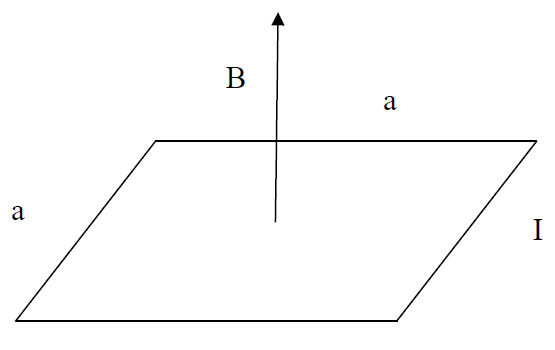
Formula:
B = (4μ₀ × N × I × a²) / (3.14 × (a² +4 z²)(4 z²+ 2a²)^(1/2))
=μ₀H
Simplified (Z = 0, a = 1):
H = 0.9 × N × I / a
Note: The regulatory text commonly uses coefficient 0.87 instead of 0.9.
6. Designing a Rectangular Loop Antenna
To generate a desired magnetic field:
1. Calculate required current (A), coil size, and number of turns to meet field specifications.
2. Ensure total wire length of the coil is less than 1/20 of the wavelength.
3. Choose an appropriate wire diameter based on expected current.
4. Apply for calibration to validate performance.
Relevant information

EU Releases Exemption Guidelines on Removability and Replaceability of Portable and LMT Batteries — Multiple Product Categories Relief Granted
On July 14, 2026, the European Commission published the "Commission Guidelines to Facilitate the Harmonised Application of Provisions on the Removability and Replaceability of Portable and Light Means of Transport (LMT) Batteries" (Commission Notice C(2026) 5032 final). These guidelines aim to provide a uniform interpretative framework for the implementation of Article 11 of the EU Battery Regulat

6G Developments: Past, Present and Future
The formulation of 6G standards has entered a more concrete phase. At the 3GPP RAN Plenary Meeting held in Singapore in June 2026, the industry made progress in multiple key research areas and finalized the timeline for Release 21, which is regarded as the first standard version expected to formally define 6G.

Overview of EN IEC 61000-4-29:2026
The key focus of the 2026 edition is to address new DC power distribution environments, especially higher-voltage DC systems. It also clarifies test generator capability, duration tolerance, current limitation during short interruptions, inrush current verification, result evaluation, and test report requirements. For products using 24 Vdc, 48 Vdc, 380 Vdc, 400 Vdc, 800 Vdc, or other DC input pow