

The IEC 61326-2-6:2025 standard was officially implemented in June
Preface: According to relevant research, since 2010, the number of medical device reporting incidents related to equipment compatibility with electromagnetic fields has increased by more than 10 times. Among them, the growth rates of "wireless communication" issues and "electromagnetic compatibility" issues are the highest. Therefore, the FDA recommends taking stricter pre-market measures for equipment to ensure that the equipment has immunity.
Next, let's take a look at what "strict" measures have been implemented in the 2025 version of the standard compared to the previous one.
1. Standard application scope
The 2025 version of the standard is applicable to all in vitro diagnostic medical electrical equipment (IVD MEE), including:
· Blood analyzer
· Biochemical analyzer
· Immuno analyzer
· Nucleic acid amplification analyzer (PCR instrument)
· Blood glucose meter
· Urine analyzer, etc.
2. Raising the requirements for test levels
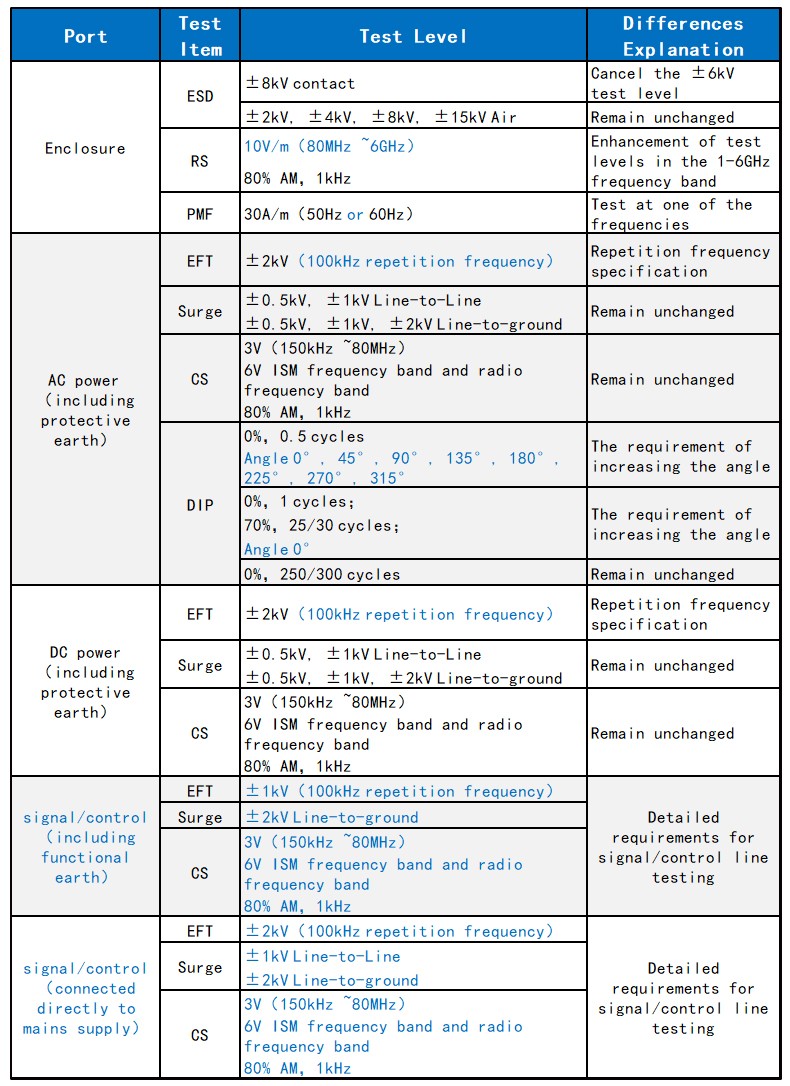
The 2025 version of the standard has updated the testing intensity and requirements for test items of EMS to meet the needs of the new technological environment:
Table 101- Equipment Requirements for PROFESSIONAL HEALTHCARE FACILITY ENVIRONMENT for EMS
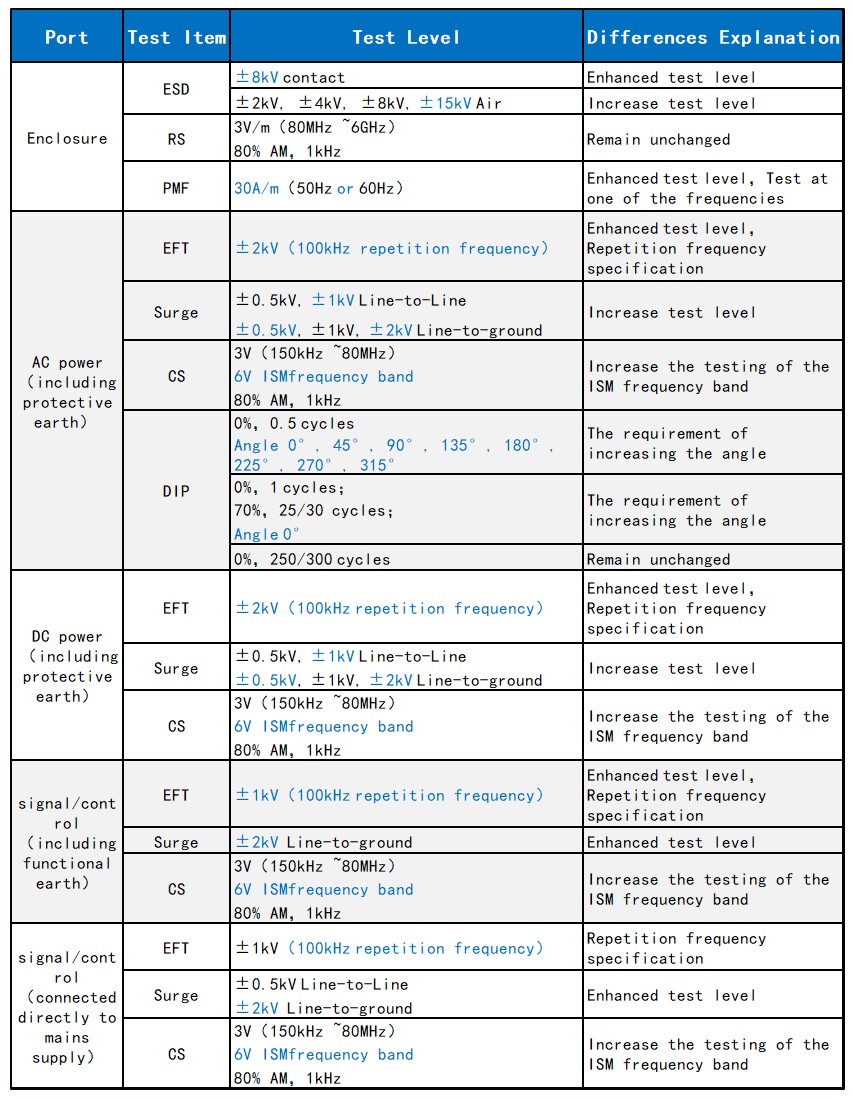
Table 102 - Requirements for Equipment in the HOME HEAL THCARE ENVIRONMENT for EMS
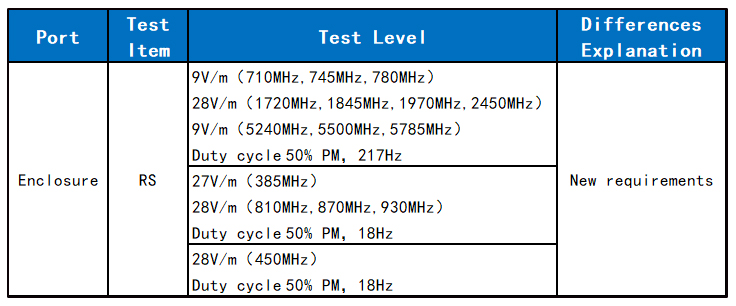
Furthermore, taking into account the usage of radio communication devices in the family medical environment, the requirement in Table 103 has been increased:
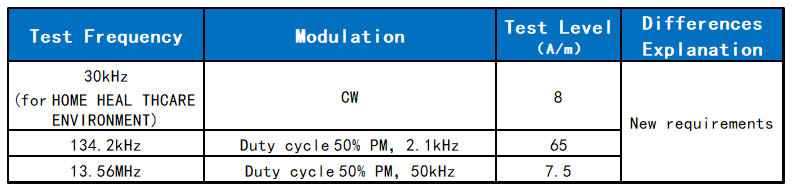
If the equipment contains sensitive components or circuits, and the isolation distance between them and the magnetic field source is less than 0.15m, and this risk factor is also unacceptable, then according to the standard method of IEC 61000-4-39, these sensitive parts need to undergo close-range magnetic field immunity testing. See Table 104
3. The performance criteria are more stringent
The new standard has imposed stricter requirements on the performance criteria of IVD MEE:
The performance standards in Tables 101 to 104 have eliminated the grade determination methods of A, B, C, and D, and instead adopted the Pass/Fail determination method. Manufacturers should, based on the applicable risk management, determine specific and detailed test Pass/Fail determination criteria for the basic safety and key performance of electromagnetic interference.
4. Improvement of the risk management process
The 2025 version of the standard has strengthened the requirements for risk management:
The equipment manufacturers are required to establish a complete risk management process in accordance with the requirements of ISO 14971:2019.
Pay special attention to the risk identification and control in the field of electromagnetic compatibility.
The manufacturer is required to conduct a risk analysis to determine which functions are considered "basic performance" and which performance degradation would pose an unacceptable risk to patient safety, that is, "critical performance".
5. Document requirements for enhancement
To enhance the traceability of tests, the 2025 version of the standard has strengthened the requirements for documentation:
Request a more detailed EMC test plan, including equipment configuration, test conditions, performance criteria, etc.
The test report should include more comprehensive information to ensure its reproducibility.
Enhanced the requirements for EMC related information in the user manual.
This is the main content of the 2025 version standard update. All IVD MEE manufacturers can implement the new requirements as soon as possible according to the updated version.
BTL Shanghai has completed the study of the standard IEC 61326-2-6:2025 and has obtained the testing capability. If you would like to know more or have any inquiries, please contact us!
Relevant information

EU Releases Exemption Guidelines on Removability and Replaceability of Portable and LMT Batteries — Multiple Product Categories Relief Granted
On July 14, 2026, the European Commission published the "Commission Guidelines to Facilitate the Harmonised Application of Provisions on the Removability and Replaceability of Portable and Light Means of Transport (LMT) Batteries" (Commission Notice C(2026) 5032 final). These guidelines aim to provide a uniform interpretative framework for the implementation of Article 11 of the EU Battery Regulat

6G Developments: Past, Present and Future
The formulation of 6G standards has entered a more concrete phase. At the 3GPP RAN Plenary Meeting held in Singapore in June 2026, the industry made progress in multiple key research areas and finalized the timeline for Release 21, which is regarded as the first standard version expected to formally define 6G.

Overview of EN IEC 61000-4-29:2026
The key focus of the 2026 edition is to address new DC power distribution environments, especially higher-voltage DC systems. It also clarifies test generator capability, duration tolerance, current limitation during short interruptions, inrush current verification, result evaluation, and test report requirements. For products using 24 Vdc, 48 Vdc, 380 Vdc, 400 Vdc, 800 Vdc, or other DC input pow