

Sharing|EU EMC Test Standards OJ Version Guide: Coordinated Standards and Directives Explained
Recently, we have received numerous inquiries regarding the OJ (Official Journal of the EU, OJEU) versions of EMC testing standards, with the most frequent question being 'Which standard versions have been adopted by the OJ?' The OJ standard system encompasses multiple technical specifications, and the officially adopted versions must be verified against the latest publications in the OJEU.
OJ(Official Journal): The Official Journal of the European Union (OJEU) publishes the latest reference lists of harmonized standards and other European standards.
EU Harmonised Standards: EU harmonized standards refer to European standards developed by the three major standardization organizations in Europe, namely the European Committee for Standardization (CEN), the European Electrotechnical Standardization Committee (CENELEC), and the European Telecommunications Standards Institute (ETSI), based on regulatory directives issued by the European Commission in consultation with member states, and approved for implementation by official announcements of the European Commission. The "coordination" standard is a standard developed by the European Standards Committee based on the European Commission's "New Methods Directive" under the "New Directive Framework". Based on the corresponding instructions, the coordination standards include product standards and related testing standards.
● Coordinated standards are sufficient conditions for compliance with relevant directives, meaning that products that meet coordinated standards are presumed to meet CE certification;
● Coordinated standards are the choice of products assumed to comply with CE certification requirements, but they are not the only way; Enterprises can choose standards equivalent to or higher than the coordinated standards for CE certification of their products;
● Coordinated standards are not mandatory standards, but voluntary standards;
● Coordination standards are universal standards for EU member states, and matters that already have coordination standards do not need to meet the standards of member states.
Note: The reference materials for coordinating standards and other unified European standards must be published in the Official Journal of the European Union (OJEU).
EU Directive: It is an important legal form in the EU legislative system, characterized by binding only on member states, but allowing member states to achieve directive objectives through their own legal procedures.
Common commands include:
Electromagnetic Compatibility (EMC) Directive 2014/30/EU;
Radio Equipment (RED) Directive 2014/53/EU;
Medical Device Directive 93/42/EEC
……
Note: Products that need to be exported to EU countries must comply with the corresponding directives.
The following is a brief list of frequently consulted standards by the editor, hoping to be helpful to everyone.
1. Belonging to Directive 2014/30/EU
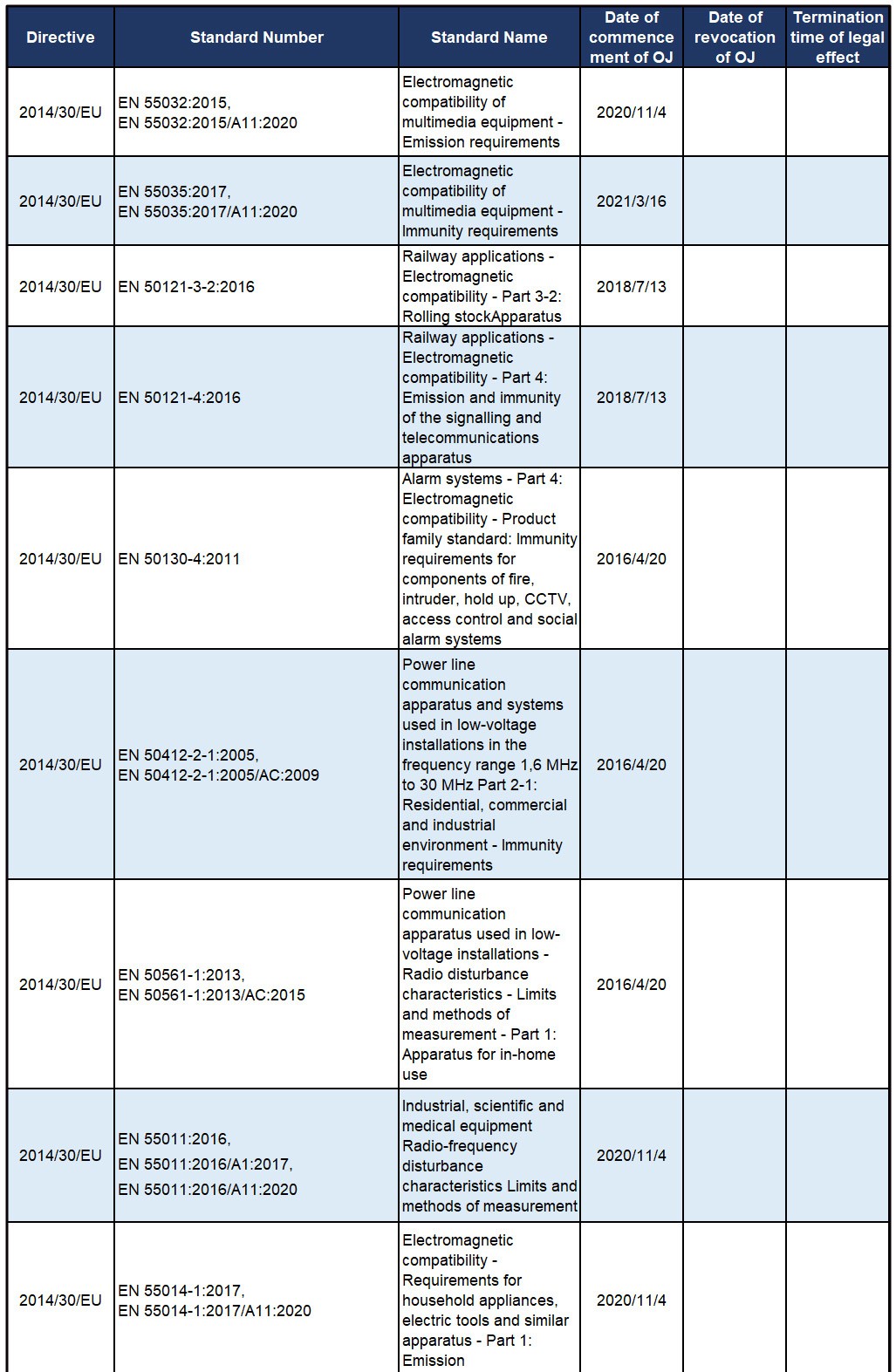
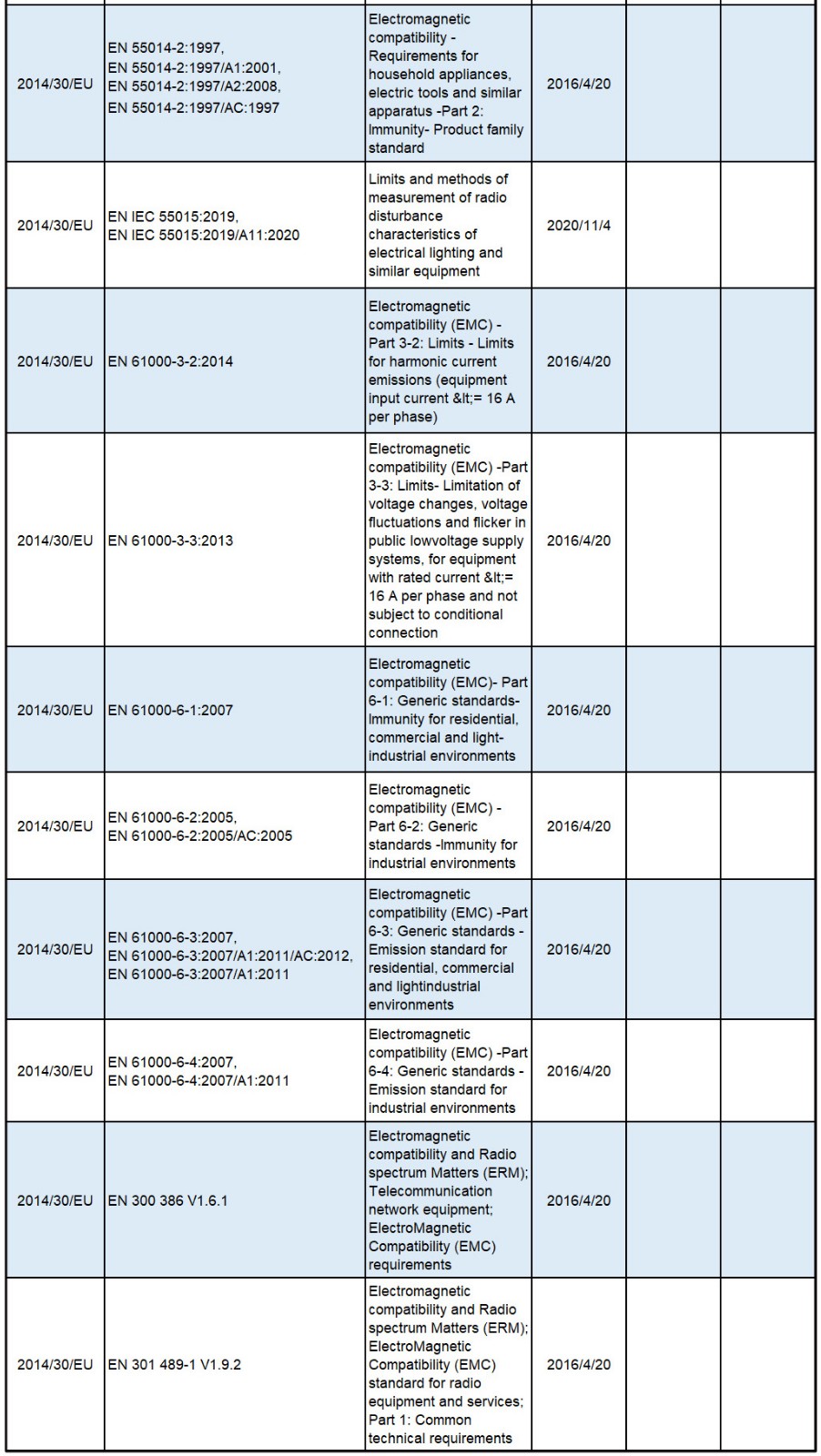
2. Belonging to Directive 2014/53/EU
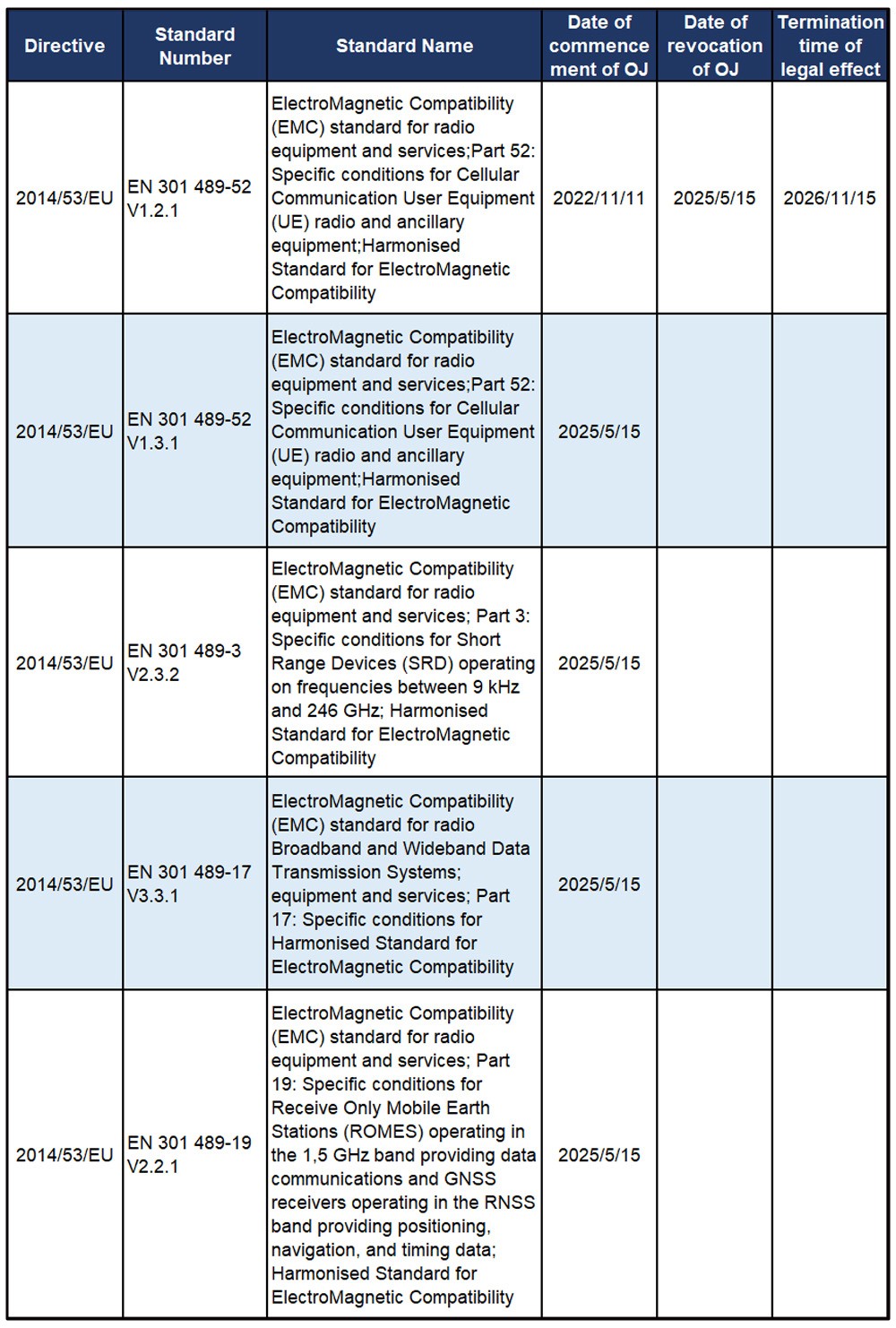
3. Belonging to Directive 93/42/EEC
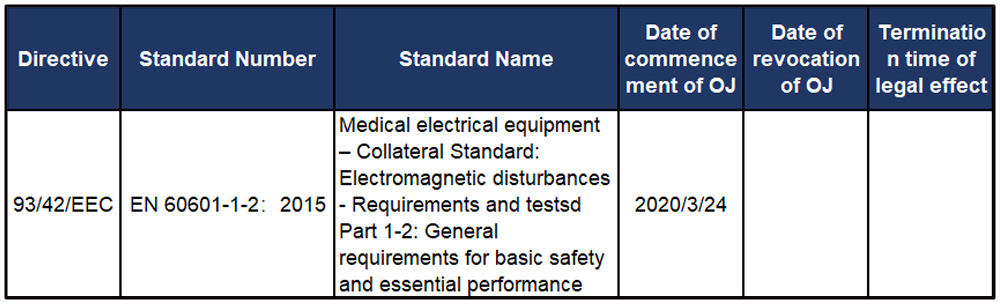
Date of commencement of OJ: The date on which the presumption of conformity begins or has already begun, without restriction of publication in the Official Journal of the European Union (OJ).
Date of revocation of OJ: The date on which it is officially revoked or abolished from the Official Journal of the European Union (OJ).
Termination time of legal effect: The date on which the legal effect of this version of the standard officially ends.
Reminder: Information is time sensitive, and everything is subject to the Official Journal of the EU!!!
The article is quite short,Enthusiasm is not short. There are still many Harmonised standards.
The EMC engineering team in the South China region of BTL consists of dedicated setup personnel, project assessment managers, on-site testing personnel and report writers. This team forms a complete professional service system throughout the entire process, ensuring that the testing is more efficient, more meticulous and more reliable.
The radiation testing site has 2 10-meter radiation fields, 6 3-meter radiation fields (966 standard), 4 conduction testing site, and multiple complete EMS testing systems. With years of testing experience and abundant resources, we can efficiently fulfill OJ standards and other customized testing requirements, meeting the needs for rapid evidence collection.
To learn more about OJ information, please feel free to call us for consultation. We are enthusiastic to answer your questions and welcome your call!!!
Relevant information

EU Releases Exemption Guidelines on Removability and Replaceability of Portable and LMT Batteries — Multiple Product Categories Relief Granted
On July 14, 2026, the European Commission published the "Commission Guidelines to Facilitate the Harmonised Application of Provisions on the Removability and Replaceability of Portable and Light Means of Transport (LMT) Batteries" (Commission Notice C(2026) 5032 final). These guidelines aim to provide a uniform interpretative framework for the implementation of Article 11 of the EU Battery Regulat

6G Developments: Past, Present and Future
The formulation of 6G standards has entered a more concrete phase. At the 3GPP RAN Plenary Meeting held in Singapore in June 2026, the industry made progress in multiple key research areas and finalized the timeline for Release 21, which is regarded as the first standard version expected to formally define 6G.

Overview of EN IEC 61000-4-29:2026
The key focus of the 2026 edition is to address new DC power distribution environments, especially higher-voltage DC systems. It also clarifies test generator capability, duration tolerance, current limitation during short interruptions, inrush current verification, result evaluation, and test report requirements. For products using 24 Vdc, 48 Vdc, 380 Vdc, 400 Vdc, 800 Vdc, or other DC input pow